

Book Appointment with the best "General Physicians"
Book AppointmentCrooked or crowded teeth can be treated with more than one method today. Invisible braces and metal braces are the two most common options.
Both work by applying steady pressure to shift teeth into place over time. The real difference lies in how they look, feel, and fit into daily life.
Key Takeaways
- Metal braces use brackets and wires, while invisible braces use a series of clear, removable trays.
- Metal braces generally handle complex misalignment better, while invisible braces work best for mild to moderate cases.
- Invisible braces are removable and less noticeable, but need more daily discipline to work well.
- Clear aligners often finish treatment faster in straightforward cases, though this varies by case.
- Cost depends on the provider and case complexity, and neither option is a low cost choice.
Quick Answer at a Glance
| Feature | Invisible Braces | Metal Braces |
| Visibility | Nearly invisible | Clearly visible |
| Material | Clear plastic trays | Metal brackets and wires |
| Removable | Yes | No |
| Best for | Mild to moderate misalignment | Mild to severe misalignment |
| Typical treatment time | 6 to 18 months | 18 to 24 months |
| Daily wear needed | 20 to 22 hours | Worn at all times |
What Are Invisible Braces?
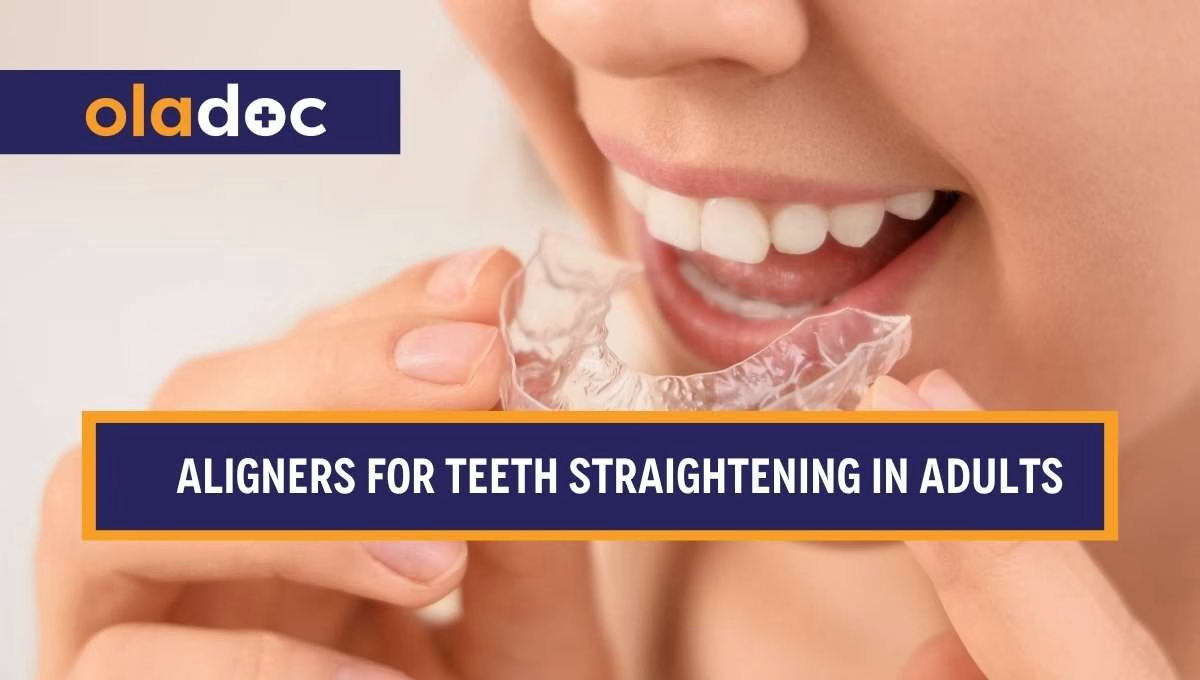
Invisible braces are a series of clear, custom made plastic trays, also called aligners. Each tray shifts the teeth slightly, and is replaced with the next one in the series every one to two weeks.
Systems such as Invisalign are the most recognized brand of clear aligners, though several manufacturers now offer similar products.
The trays are removable, so they come out to eat, brush, and floss. This makes oral hygiene easier compared to fixed brackets.
Success depends heavily on discipline. Aligners must stay in for 20 to 22 hours a day to keep treatment on schedule.
Treatment usually starts with a 3D scan or mold of the teeth. Software then maps out each stage of movement, so the patient can see a projected outcome before starting.
What Are Metal Braces?
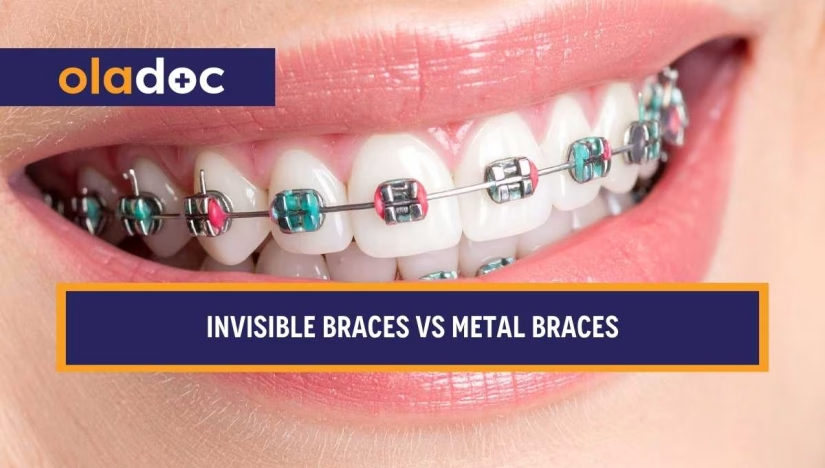
Metal braces are the traditional fixed option. Small brackets are bonded to each tooth, and connected by a thin archwire.
An orthodontist tightens or adjusts the wire every four to six weeks, gradually guiding teeth into proper alignment.
Because they are fixed in place, metal braces do not rely on the patient remembering to wear them. This makes them a reliable choice for children and for complex cases.
Small elastic bands are sometimes added to correct bite issues alongside the wire and brackets.
Ceramic braces are a tooth colored variant of the same system, offering a less visible look while keeping the same fixed structure. Some brackets are self ligating, which can reduce friction and shorten certain appointment times.
Key Differences
Comfort and Daily Life
Aligners feel smoother against the cheeks and gums, since there is no metal or wire to cause irritation.
Metal braces can rub against soft tissue, especially in the first few weeks, though orthodontic wax helps reduce this.
Pain and Adjustment Period
Both options cause some pressure or soreness for a few days after a new tray or a wire adjustment.
Aligner soreness tends to be milder, since each tray shifts teeth by a smaller amount than a wire adjustment does.
Treatment Time and Effectiveness
A systematic review comparing clear aligners with fixed appliances found aligners often finish treatment faster, but fixed braces still control tooth rotation, torque, and bite retention more precisely in complex cases.
This means the better option often depends on how complex the misalignment is, not just personal preference.
Cost
Metal braces are usually the more budget friendly option, since the materials and lab work involved are simpler.
Invisible braces tend to cost more, largely because each tray is custom manufactured for the patient’s specific treatment plan.
Maintenance and Oral Hygiene
Aligners can be removed for brushing and flossing, which makes cleaning teeth simpler during treatment.
Metal braces require more careful brushing around brackets and wires, along with tools like interdental brushes or a water flosser.
Common Myths About Braces
A few misconceptions come up often when people compare these two options.
- Myth: Braces are only for kids. Adults now make up a large and growing share of orthodontic patients.
- Myth: Invisible braces always work faster. Speed depends on how complex the case is, not just the appliance type.
- Myth: Metal braces hurt constantly. Soreness is usually limited to a few days after each adjustment, not the entire treatment.
Who Is a Good Candidate for Each Option?
Children and teens with jaws still growing are often prescribed metal braces, since orthodontists can guide bone growth as well as tooth position.
Adults with mild to moderate spacing or crowding, and a strong preference for a less visible option, tend to be good candidates for invisible braces.
People with missing teeth, dental bridges, or certain implants may not qualify for aligner treatment, and should be evaluated case by case.
Athletes and musicians sometimes prefer aligners, since the trays can be removed for activities that need a mouthguard or a wind instrument.
Aftercare and Retainers
Both options require a retainer once active treatment ends. Teeth naturally drift back toward their original position without one.
Retainers come in fixed and removable forms. An orthodontist recommends the type and wear schedule based on the original case.
Skipping retainer wear is one of the most common reasons teeth shift back after treatment, regardless of which braces were used.
Which Should You Choose?
Mild to moderate crowding or spacing often responds well to either option, so the choice comes down to lifestyle and budget.
Severe crowding, significant bite problems, or major tooth rotation usually respond better to metal braces.
Adults who want a less visible option, and who are disciplined about wearing trays consistently, often lean toward invisible braces.
An orthodontic evaluation, including X-rays and a bite assessment, is the only reliable way to confirm which option fits a specific case.
Conclusion
Both invisible braces and metal braces can straighten teeth effectively when used as directed. The right choice depends on the complexity of the case, budget, and how consistently a patient can follow the treatment plan.
FAQs
Are invisible braces as effective as metal braces?
For mild to moderate cases, both work well. Metal braces tend to handle complex movements more precisely.
How long does treatment take?
Invisible braces often take 6 to 18 months, while metal braces typically take 18 to 24 months.
Do invisible braces hurt less than metal braces?
Aligners tend to cause less irritation to the cheeks and gums, though both can cause pressure discomfort after adjustments.
Can invisible braces fix severe crowding?
Severe crowding or major bite issues usually respond better to metal braces, though some advanced aligner systems can treat certain complex cases.
Which option costs more?
Invisible braces are usually more expensive, since each tray is custom made for the patient.
Can adults get metal braces?
Yes, metal braces work at any age and are common among adults with more complex misalignment.
How often are checkups needed with invisible braces?
Most plans schedule a checkup every 6 to 8 weeks to track progress and hand out new trays.
Disclaimer: The contents of this article are intended to raise awareness about common health issues and should not be viewed as sound medical advice for your specific condition. You should always consult with a licensed medical practitioner prior to following any suggestions outlined in this article or adopting any treatment protocol based on the contents of this article.