

Millions of women in Pakistan live with thyroid problems without knowing it. The symptoms are easy to confuse with stress, poor sleep, or hormonal changes.
Fatigue that does not go away, sudden weight gain, or feeling cold all the time may point to a thyroid problem. Many women ignore these signs for years before getting a diagnosis.
Early recognition makes a real difference. With the right test and treatment, thyroid disorders are very manageable.
Table of Contents
What Are Thyroid Symptoms in Women?
Thyroid symptoms in women are physical and emotional changes caused by an overactive or underactive thyroid gland.
The thyroid is a small, butterfly-shaped gland in the neck that controls how the body uses energy. When it stops working correctly, it affects nearly every system in the body, including metabolism, mood, heart rate, and reproductive health.
Why Are Women More Affected by Thyroid Problems?
Women are 5 to 10 times more likely to develop thyroid disorders than men. Hormonal changes play a large role in this difference.
Pregnancy, childbirth, and menopause all create hormonal shifts that can trigger thyroid problems. The immune system also behaves differently in women, making autoimmune thyroid conditions more common.
In Pakistan, iodine deficiency in certain regions adds to this risk. Women in rural areas, particularly in Khyber Pakhtunkhwa and parts of Balochistan, face a higher rate of goitre and thyroid dysfunction.
Types of Thyroid Disorders in Women
Two main thyroid disorders affect women most often.
Hypothyroidism (Underactive Thyroid)
Hypothyroidism means the thyroid gland is not producing enough thyroid hormone. The body slows down as a result. This is the more common type in Pakistani women.
The most frequent cause is Hashimoto’s disease, an autoimmune condition where the body’s immune system attacks the thyroid gland.
Hyperthyroidism (Overactive Thyroid)
Hyperthyroidism means the thyroid is producing too much hormone. The body speeds up, causing a different set of symptoms.
Graves’ disease is the most common cause of hyperthyroidism. It is also an autoimmune condition. Less commonly, thyroid nodules or inflammation can cause the gland to overproduce.
Common Thyroid Symptoms in Women
The symptoms vary depending on the type of thyroid disorder present.
Symptoms of Hypothyroidism
- Constant fatigue, even after a full night’s sleep
- Unexplained weight gain despite no change in diet
- Feeling cold all the time, especially in the hands and feet
- Dry skin and brittle hair or nails
- Constipation that does not improve with diet changes
- Heavy or irregular periods
- Depression or low mood
- Slowed heart rate
- Puffy face, especially around the eyes
- Difficulty concentrating or memory lapses
Symptoms of Hyperthyroidism
- Unexplained weight loss despite eating normally
- Rapid or irregular heartbeat
- Feeling hot or sweating excessively
- Anxiety, nervousness, or irritability
- Difficulty sleeping
- Trembling hands
- Frequent bowel movements or loose stools
- Lighter or missed periods
- Bulging eyes (in Graves’ disease specifically)
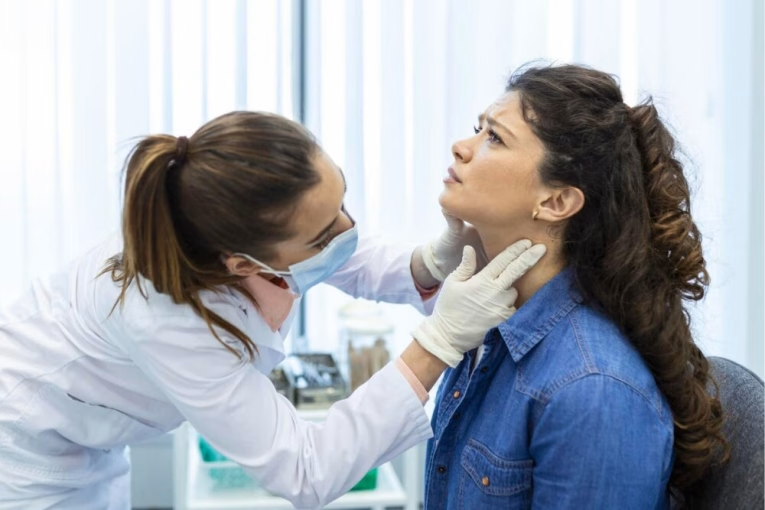
- Enlarged neck (goitre) visible as a swelling at the base of the throat
Both conditions can also cause hair thinning and changes in energy levels, which is why women often confuse them with general aging or stress.
Causes of Thyroid Problems in Women
Several factors can cause thyroid problems in women.
Autoimmune conditions are the leading cause. In Hashimoto’s disease, the immune system damages the thyroid over time. In Graves’ disease, the gland is overstimulated.
Iodine levels also matter. Iodine deficiency can cause an underactive thyroid or goitre. Excess iodine can trigger hyperthyroidism in some women.
Pregnancy is another trigger. Postpartum thyroiditis, an inflammation of the thyroid after childbirth, affects around 5% of women after delivery. Symptoms can appear months after the baby is born.
Family history increases the risk. Women with a mother or sister who has a thyroid disorder have a higher chance of developing one.
Radiation exposure to the neck area, from past treatments or medical scans, can also damage the thyroid over time.
How Is Thyroid Diagnosed in Pakistan?
A simple blood test called the TSH test (Thyroid Stimulating Hormone test) is the standard first step. It measures how hard the brain is working to stimulate the thyroid.
- A high TSH level points to hypothyroidism.
- A low TSH level points to hyperthyroidism.
Doctors may also request T3 and T4 hormone levels for a clearer picture. In some cases, a thyroid ultrasound or a radioactive iodine uptake scan is used to check the size and structure of the gland.
TSH testing is widely available across Pakistan. Major diagnostic labs in Lahore, Karachi, Islamabad, and Rawalpindi offer the TSH panel at affordable rates, typically between PKR 1700 and PKR 2,000.
Thyroid Treatment Options in Pakistan
Treatment depends on the type of thyroid disorder.
Treatment for Hypothyroidism
The standard treatment is a daily thyroid hormone tablet called levothyroxine. It replaces the hormone that the thyroid gland is not producing. Most women need to take it for life. However, always consult your doctor before taking any medication.
Regular TSH follow-up tests are needed every 6 to 12 months to adjust the dose. The medicine is widely available in Pakistan and relatively affordable.
Treatment for Hyperthyroidism
Treatment options include anti-thyroid medicines, radioactive iodine therapy, or surgery. The choice depends on the cause, the severity, and the woman’s plans for pregnancy.
Anti-thyroid medicines such as carbimazole or methimazole reduce hormone production. They are the first choice for most women in Pakistan. Do not take any medication without consulting the specialist.
Radioactive iodine therapy is available in major cities and is safe for most women who are not pregnant. Surgery to remove part or all of the thyroid is considered in specific cases.
When to Consult a Specialist
A doctor should be seen if any thyroid symptoms have been present for more than two to three weeks. Women who are pregnant, trying to conceive, or have recently delivered should get a TSH check as a routine step.
A referral to an endocrinologist (a hormone specialist) is recommended if the TSH result is abnormal or if the thyroid is visibly swollen. Early treatment prevents complications such as infertility, heart problems, and severe fatigue.
Verified endocrinologists in Karachi and other major cities of Pakistan are available for consultation.
The Takeaway
Thyroid disorders are common in Pakistani women and very treatable when caught early. A TSH blood test is all it takes to start the process. Symptoms like unexplained fatigue, weight changes, or irregular periods should prompt a thyroid check, not be dismissed as normal stress.
FAQs
The earliest signs are usually fatigue that does not improve with rest, unexplained weight changes, and irregular periods. Hair thinning and feeling unusually cold or hot are also common early indicators.
An untreated thyroid disorder can cause difficulty conceiving, miscarriage, or complications during pregnancy. TSH testing during pregnancy is strongly recommended and available at most hospitals across Pakistan.
Most thyroid conditions are manageable rather than fully curable. Hypothyroidism requires lifelong medication in most cases. Some cases of hyperthyroidism can go into remission with treatment.
A TSH blood test is available at all major diagnostic labs in Pakistan. The cost typically ranges from PKR1700 to PKR 2,000. No special preparation is required for the test.
Hypothyroidism slows the metabolism, which leads to weight gain. This is one of the most common reasons women seek a thyroid check. Weight usually stabilises once the hormone level is corrected with medication.
Hypothyroidism means the thyroid produces too little hormone, causing the body to slow down. Hyperthyroidism means it produces too much, causing the body to speed up. Both are diagnosed with a TSH blood test.