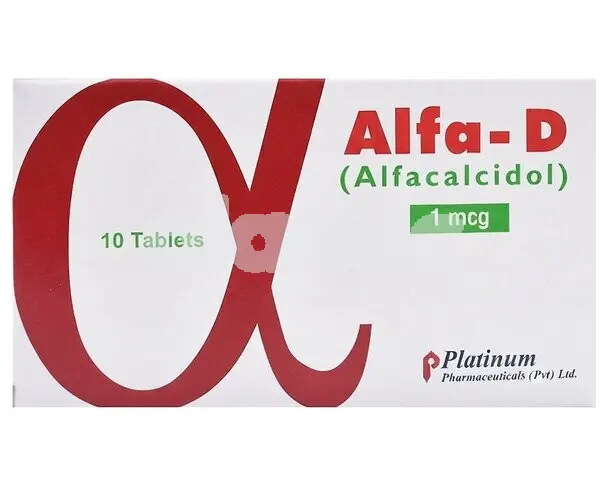
About Alfa-D Tablet 1mcg
Alfa-D Tablet 1mcg is an active vitamin D analogue used for renal bone disease and low calcium levels.
Alfa-D Tablet 1mcg Uses
- Bone disease caused by chronic kidney disease, known as renal osteodystrophy
- Low blood calcium in hypoparathyroidism, including after thyroid or parathyroid surgery
- Secondary hyperparathyroidism in patients on dialysis
- Vitamin D resistant rickets in children and osteomalacia in adults
- Vitamin D deficiency that fails to improve with plain vitamin D supplements
- Supportive management of bone loss linked to poor calcium absorption
Alfa-D Tablet 1mcg Benefits
- Works even when the kidneys cannot activate ordinary vitamin D
- Raises calcium absorption from the gut within days rather than weeks
- Helps ease bone pain, muscle weakness and cramps caused by low calcium
- Lowers raised parathyroid hormone that drives bone thinning
- Leaves the body faster than older vitamin D preparations, so raised calcium settles sooner after stopping
- Simple once daily tablet that fits easily into a dialysis routine
What Experts Say
Alfacalcidol is a prodrug that only needs hydroxylation in the liver to become calcitriol, the fully active form of vitamin D. That single step matters because damaged kidneys lose the ability to carry out the final activation of ordinary vitamin D. Patients with advanced renal impairment therefore respond to alfacalcidol when plain cholecalciferol does little.
The 1mcg strength sits at the higher end of routine maintenance dosing and is usually reached by gradual upward titration. Physicians in Pakistan generally start low, then adjust every two to four weeks based on serum calcium, phosphate and parathyroid hormone. Doses are lowered once parathyroid hormone reaches target, since oversuppression causes low turnover bone.
Monitoring is the core safety practice with this molecule. Calcium and phosphate are checked at least monthly during titration and every few months once stable. Pakistan carries a heavy burden of chronic kidney disease, so many patients stay on treatment for years. Doctors also weigh calcium containing phosphate binders and dietary intake before increasing the dose.
Drug Class
- Vitamin D analogue
- Active vitamin D receptor activator
- Agent for calcium and bone mineral disorders
Alfa-D Tablet 1mcg Uses in Urdu
- گردے کی دائمی بیماری کی وجہ سے ہڈیوں کی کمزوری کے علاج کے لیے
- خون میں کیلشیم کی کمی اور ہائپوپیراتھائیرائیڈزم میں
- ڈائیلاسز کے مریضوں میں پیراتھائیرائیڈ ہارمون کی زیادتی کم کرنے کے لیے
- بچوں میں سوکھے کی بیماری اور بڑوں میں ہڈیوں کے نرم ہونے میں
- وٹامن ڈی کی ایسی کمی جو عام وٹامن ڈی سے ٹھیک نہ ہو
- ہڈیوں کے درد اور پٹھوں کی کمزوری میں معاون علاج کے طور پر
Alfa-D Tablet 1mcg formula
How to use Alfa-D Tablet 1mcg?
- Take the tablet exactly as your doctor prescribes and never change the dose on your own
- Swallow it whole with a glass of water, at the same time each day
- It can be taken with or without food, though many patients prefer after breakfast to reduce nausea
- If you miss a dose, take it when you remember, but skip it if the next dose is close
- Get your calcium and phosphate blood tests done on the dates your doctor gives you
- Tell your doctor before starting any calcium tablet, antacid or multivitamin alongside this medicine
- Keep taking it during dialysis treatment unless your nephrologist advises a break
Drug Interactions
- Calcium supplements and calcium based phosphate binders: Add to the calcium raising effect and increase the risk of dangerous levels.
- Thiazide diuretics: Reduce calcium loss in urine, so blood calcium can climb quickly.
- Digoxin and related heart drugs: High calcium raises the chance of serious heart rhythm problems.
- Phenytoin, phenobarbitone and carbamazepine: Speed up breakdown of vitamin D compounds and may reduce the effect.
- Magnesium containing antacids: Can cause magnesium build up in patients with kidney failure.
- Other vitamin D products: Combining them duplicates the action and can lead to vitamin D toxicity.
Risks and warnings
- High blood calcium: The main risk of treatment, showing as thirst, frequent urination, constipation, nausea and confusion.
- Regular blood testing: Calcium and phosphate must be checked monthly while the dose is being adjusted, then periodically.
- Kidney stones: Prolonged high calcium can lead to stones or calcium deposits inside kidney tissue.
- Calcium supplements: Taking extra calcium or antacids without medical advice can push calcium levels dangerously high.
- Pregnancy and breastfeeding: Use only when clearly needed and under specialist supervision, since high calcium can affect the baby.
- Heart and vessel calcification: Long term high calcium and phosphate together can harden blood vessels in kidney patients.
- Sarcoidosis and similar conditions: Patients with granulomatous disease are far more sensitive to vitamin D and need lower doses.
- Children: Dosing is weight based and must be recalculated as the child grows.
Alfa-D Tablet 1mcg Side Effects
- Nausea or an upset stomach
- Vomiting
- Constipation or, less often, diarrhoea
- Abdominal discomfort
- Loss of appetite
- Metallic taste in the mouth
- Headache
- Tiredness or general weakness
- Dizziness
- Muscle or bone pain
- Increased thirst and passing more urine, a warning sign of high calcium
- Itching or skin rash in sensitive patients
Storage Conditions
- Keep the tablets in their original blister strip until the moment you take a dose
- Store below 25 degrees Celsius in a dry place, away from direct sunlight
- Avoid humid spots such as the bathroom or near a kitchen sink, as moisture damages the tablets
- Keep the pack well out of reach of children
- Do not use any tablet after the expiry date printed on the strip or carton