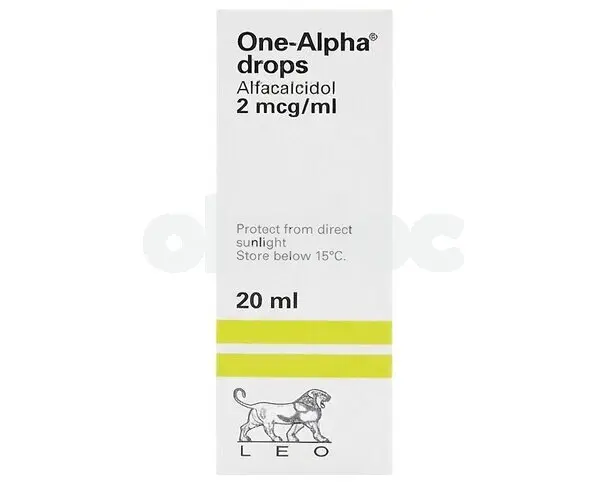
About One-Alpha Drops 2mcg/ml
One-Alpha Drops 2mcg/ml is an active vitamin D analogue used to treat calcium and bone disorders linked to kidney disease.
Uses of One-Alpha Drops
- Treats renal osteodystrophy in chronic kidney disease and dialysis patients.
- Manages hypoparathyroidism.
- Treats vitamin D deficient rickets and osteomalacia.
- Supports treatment of vitamin D resistant rickets.
Benefits of One-Alpha Drops
- Works directly in the body without needing kidney activation.
- Drop form allows precise, flexible dosing.
- Helps restore normal calcium and phosphate balance.
- Suitable for long-term management.
What Experts Say
Alfacalcidol is a synthetic analogue of active vitamin D3. Doctors in Pakistan frequently prescribe it for patients whose kidneys can no longer convert vitamin D into its active form.
Nephrologists at major Pakistani hospitals often prescribe One-Alpha Drops for dialysis patients to manage renal bone disease.
Experts recommend regular monitoring rather than self-adjustment.
Drug Class
- Vitamin D analogue
- Bone and mineral metabolism regulator
- گردے کی بیماری سے ہونے والی ہڈیوں کی کمزوری کے علاج میں
- پیراتھائیرائیڈ غدود کی کمزوری میں
- وٹامن ڈی کی کمی سے ہونے والی رکٹس اور ہڈیوں کی نرمی میں
- آسٹیوپوروسس کے علاج میں معاون
- جسم میں کیلشیم اور فاسفیٹ کا توازن برقرار رکھنے کے لیے
One-Alpha Drops 2mcg/ml formula
How to use One-Alpha Drops 2mcg/ml?
- Take exactly as prescribed, usually once daily.
- Measure the dose carefully with the dropper provided.
- Mix into a small amount of water, milk, or food for children.
- Take at the same time each day.
- Do not stop suddenly without consulting your doctor.
- Attend all scheduled blood tests.
Drug Interactions
- Thiazide diuretics: Increased risk of hypercalcemia.
- Digoxin: High calcium raises risk of irregular heartbeat.
- Magnesium-containing antacids: Risk of high magnesium, especially on dialysis.
- Other vitamin D supplements: Increases toxicity risk.
- Corticosteroids: Can reduce effectiveness on bone health.
Risks and warnings
- Hypercalcemia risk: Overdose can raise blood calcium to dangerous levels.
- Heat sensitivity: Keep bottle away from direct sunlight and heat.
- Dialysis patients: Need closer monitoring.
- Pregnancy and breastfeeding: Use only under medical supervision.
- Children under 20kg: Not generally recommended without specialist advice.
- Nausea and vomiting
- Loss of appetite
- Constipation or diarrhea
- Headache
- Dry mouth or a metallic taste
- Skin rash or itching
- Signs of high calcium such as excessive thirst, frequent urination, or confusion (needs urgent care)
Storage Conditions
- Store the bottle upright at room temperature, below 25°C, away from direct sunlight.
- Close the dropper cap tightly after each use.
- Keep out of reach of children.
- Discard the bottle once opened beyond the stated period.
- Avoid using drops if the liquid changes color or looks cloudy.