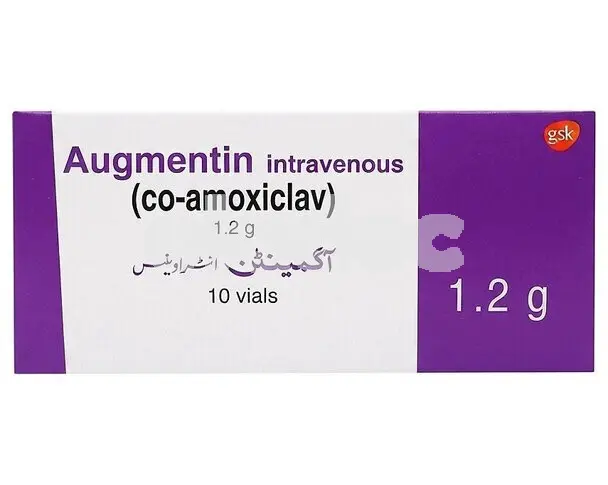
About Augmentin Injection 1.2g
Augmentin Injection 1.2g combines amoxicillin and clavulanic acid, given IV for serious bacterial infections.
Augmentin Injection 1.2g Uses
- Severe respiratory tract infections including hospital acquired pneumonia
- Complicated urinary tract infections and kidney infections
- Skin and soft tissue infections including cellulitis and abscesses
- Bone and joint infections such as osteomyelitis
- Intra abdominal infections including peritonitis
- Post surgical infections and surgical wound infections
- Prevention of infection during major surgery as a prophylactic dose
- Severe dental and jaw infections that need hospital level care
Augmentin Injection 1.2g Benefits
- Delivers the antibiotic directly into the bloodstream for fast action
- Clavulanic acid protects amoxicillin from bacterial resistance enzymes
- Covers a broad range of bacteria in one single injection
- Useful when a patient cannot swallow oral antibiotics
- Allows doctors to control the exact dose in critical infections
- Reduces the risk of infection spreading before surgery
What Experts Say
Doctors across Pakistan often choose amoxicillin with clavulanic acid when an infection looks too serious for oral tablets alone. Giving it as an IV injection means the antibiotic reaches a high level in the blood within minutes. This matters in hospitals where patients present with fever, low blood pressure or signs of a spreading infection.
Clavulanic acid is added because many bacteria produce an enzyme called beta lactamase that can destroy amoxicillin on its own. Physicians recommend this combination specifically because it stays effective against bacteria that would otherwise resist plain penicillin. This is one reason it remains a first line hospital antibiotic in Pakistan for mixed or unknown infections.
In Pakistan, overuse of antibiotics without proper diagnosis has made resistance a growing concern. For this reason doctors in Pakistan usually reserve the injectable form for confirmed moderate to severe infections and switch patients to oral treatment once they improve. This step down approach helps control resistance while still treating the infection effectively.
Drug Class
- Beta lactam antibiotic, penicillin combined with a beta lactamase inhibitor
Augmentin Injection 1.2g Uses in Urdu
- پھیپھڑوں کے شدید انفیکشن اور نمونیا کے علاج میں
- گردوں اور پیشاب کی نالی کے پیچیدہ انفیکشن میں
- جلد اور نرم بافتوں کے شدید انفیکشن میں
- ہڈیوں اور جوڑوں کے انفیکشن میں
- پیٹ کے اندرونی انفیکشن جیسے پیریٹونائٹس میں
- سرجری کے بعد ہونے والے زخموں کے انفیکشن میں
- بڑی سرجری سے پہلے انفیکشن سے بچاؤ کے لیے
Augmentin Injection 1.2g formula
- Amoxicillin + Clavulanic Acid
Available forms
- Injection (IV powder for reconstitution)
How to use Augmentin Injection 1.2g?
- Given only by a doctor or trained hospital staff as an intravenous injection or infusion, never self administered at home
- The powder in the vial is reconstituted with sterile water for injection just before use
- Administered slowly through a vein over three to four minutes, or as a slow infusion over thirty to forty minutes for larger doses
- Usual adult dose is one vial of 1.2g given every eight hours, increased to every six hours in more severe infections
- Dose and frequency are adjusted by the doctor based on kidney function, weight and severity of infection
- Used immediately after reconstitution and any unused solution is discarded as per hospital protocol
- Course length is decided by the treating doctor and should be completed fully even if symptoms improve early
Drug Interactions
- Probenecid: Slows down elimination of amoxicillin from the body and increases its blood level, so it is generally avoided together.
- Blood thinners like warfarin: Can increase bleeding risk, so clotting levels are monitored closely during treatment.
- Methotrexate: This antibiotic combination can raise methotrexate levels in the blood and increase the risk of toxicity.
- Allopurinol: Taking it alongside amoxicillin may increase the chance of developing a skin rash.
- Oral contraceptives: May become less effective during antibiotic treatment, so backup contraception is advised.
- Other antibiotics: Combining with certain other antibiotics is avoided unless specifically directed by the treating doctor.
Risks and warnings
- Penicillin allergy: Should not be given to patients with a known allergy to penicillin or cephalosporin antibiotics due to risk of severe allergic reaction.
- Liver disease: Needs caution in patients with a history of liver problems or previous jaundice linked to this antibiotic combination.
- Kidney impairment: Dose is adjusted in patients with reduced kidney function since the drug is cleared through the kidneys.
- Pregnancy and breastfeeding: Used only when clearly needed and under direct medical supervision.
- Severe allergic reaction: Hospital staff monitor for signs of anaphylaxis during and after the injection since IV antibiotics can trigger rapid reactions.
- Mononucleosis: Amoxicillin based antibiotics can cause a widespread skin rash in patients with glandular fever.
- Long hospital courses: Extended IV use is monitored with periodic liver and kidney function tests.
Augmentin Injection 1.2g Side Effects
- Pain, redness or swelling at the injection site
- Nausea, vomiting or diarrhea
- Skin rash or itching
- Oral or vaginal yeast infection (thrush)
- Headache and mild dizziness
- Loss of appetite
- Vein inflammation at the infusion site (phlebitis)
- Severe allergic reaction with swelling of the face, lips or throat
- Difficulty breathing or sudden drop in blood pressure
- Severe skin reactions such as blistering or peeling skin
- Yellowing of the skin or eyes indicating liver problems
- Severe or persistent diarrhea that may signal a serious bowel infection
Storage Conditions
- Unopened vials are stored below 25°C, away from direct sunlight and moisture, which suits most air conditioned hospital pharmacy stores in Pakistan
- Vials are kept in their original carton to protect the powder from humidity, especially important during Pakistan's hot and humid summer months
- Once reconstituted with sterile water, the solution is used immediately and never stored for later use
- Reconstituted solution is not frozen at any point
- Kept out of reach of children and handled only by trained hospital or clinic staff
- Any vial with discoloration, particles or damage to packaging is discarded rather than used