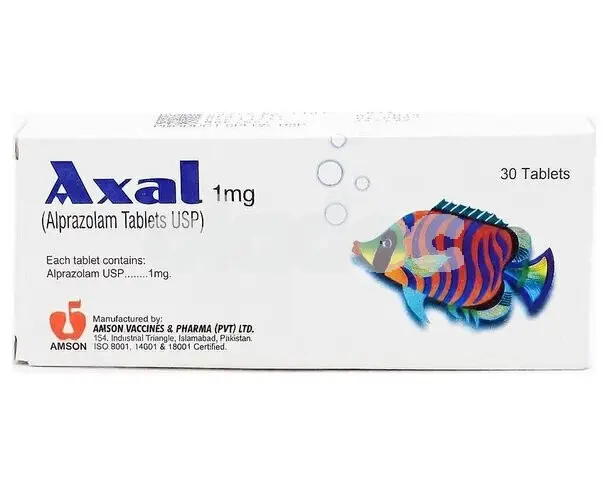
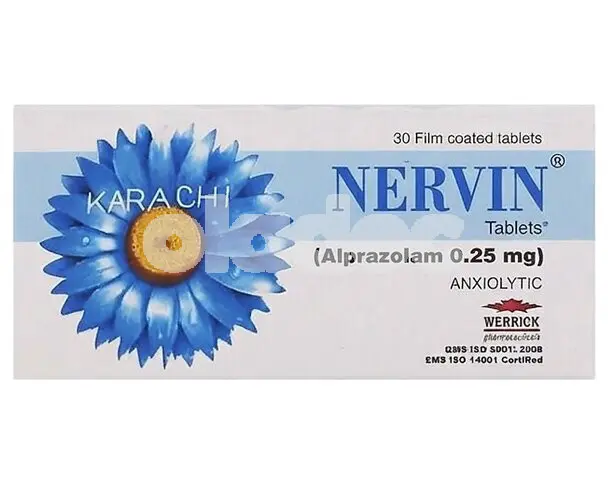
About Azolam Tablet 0.5mg
Azolam is a tablet used to treat anxiety disorders and panic attacks under strict medical supervision.
Azolam Tablet Uses
- Generalized anxiety disorder characterized by persistent, excessive worry and tension.
- Panic disorder with or without agoraphobia, including recurrent unexpected panic attacks.
- Anxiety associated with depression under close psychiatric supervision.
- Short-term relief of acute anxiety episodes causing significant distress or impairment.
- Situational anxiety before medical or dental procedures where short-term anxiolysis is required.
Azolam Tablet Benefits
- Provides rapid-onset anxiolytic relief, with peak effect within 1 to 2 hours of taking the dose.
- More potent than older benzodiazepines such as Diazepam at equivalent doses, allowing effective anxiety control at lower milligram quantities.
- Effective for both generalized anxiety and panic disorder, covering two distinct anxiety presentations with one medicine.
- Short to intermediate half-life reduces the risk of daytime sedation carryover compared to long-acting benzodiazepines.
- Available in two strengths, allowing dose titration from the lowest effective amount.
What Experts Say
Azolam contains Alprazolam, a triazolobenzodiazepine, a subclass of benzodiazepines distinguished by the fusion of a triazole ring onto the benzodiazepine core. This structural modification makes Alprazolam significantly more potent than classical benzodiazepines such as Diazepam. Like all benzodiazepines, Alprazolam acts by binding to an allosteric site on the GABA-A receptor complex, enhancing the receptor's response to GABA. The result is increased chloride ion conductance into the neuron, hyperpolarization of the cell membrane, and reduced neuronal excitability. Clinically, this produces anxiolysis, sedation, muscle relaxation, and anticonvulsant effects.
Alprazolam has a half-life of approximately 6 to 27 hours, which is shorter than Diazepam but longer than ultra-short agents such as Triazolam. This intermediate duration means that inter-dose anxiety and early morning rebound anxiety can occur in patients on scheduled dosing, particularly if the dose is insufficient to maintain consistent blood levels throughout the day. Clinicians managing panic disorder often prescribe Alprazolam in three to four divided doses daily rather than once or twice daily for this reason.
The dependence potential of Alprazolam is considered higher than most other benzodiazepines due to its potency and relatively rapid onset of action. Tolerance to the anxiolytic effect can develop within weeks of regular use. Physical dependence can establish itself even at therapeutic doses within 4 to 6 weeks.
Withdrawal from Alprazolam is potentially more severe than withdrawal from longer-acting benzodiazepines and can precipitate life-threatening seizures if stopped abruptly. For this reason, a structured tapering protocol, typically converting to an equivalent dose of a longer-acting benzodiazepine such as Diazepam before gradual reduction is the recommended approach for discontinuation in dependent patients. Azolam must never be used in patients with a history of substance dependence without specialist supervision.
Drug Class
- Anxiolytic and CNS Depressant.
Packaging and Quantity
- 1 pack contains 30 tablets.
- Packaged as 3 strips of 10 tablets each.
When Not to Use Azolam
- Known allergy or hypersensitivity to Alprazolam or any other benzodiazepine.
- Severe respiratory impairment or sleep apnea.
- Myasthenia gravis.
- Acute narrow-angle glaucoma.
- Severe liver disease or hepatic encephalopathy.
- History of alcohol, drug, or substance dependence.
- Children and adolescents under 18 years of age.
- Concurrent use of strong CYP3A4 inhibitors such as ketoconazole or itraconazole.
Azolam Tablet Uses in Urdu
ازولام ٹیبلٹ کو درج ذیل حالات میں استعمال کیا جاتا ہے:
- بے چینی اور اضطراب (Anxiety Disorder) کا قلیل مدتی علاج۔
- گھبراہٹ کے دورے (Panic Attacks) کا علاج، خواہ اکیلے ہوں یا باہر جانے کے ڈر کے ساتھ۔
- ڈپریشن کے ساتھ ہونے والی بے چینی کا ڈاکٹر کی نگرانی میں علاج۔
- طبی یا دانتوں کے طریقہ علاج سے پہلے ہونے والی اضطرابی کیفیت کا علاج۔
Azolam Tablet 0.5mg formula
How to use Azolam Tablet 0.5mg?
- Azolam may be taken with or without food.
- The tablet should be swallowed whole with a full glass of water.
- Alcohol must be completely avoided throughout the entire treatment course.
- This medicine must not be stopped suddenly. The dose must always be reduced gradually under doctor supervision to prevent withdrawal and seizures.
- The standard adult starting dose for anxiety is 0.25mg to 0.5mg three times daily. For panic disorder, higher doses may be required as determined by the prescribing doctor. The maximum daily dose is 4mg.
- The dose should not be increased or the treatment extended beyond 4 weeks without explicit medical advice.
Drug Interactions
Alprazolam is metabolized primarily by CYP3A4 enzymes in the liver. This makes it susceptible to interactions with any medicine that inhibits or induces this enzyme. All current medicines, supplements, and herbal products must be disclosed to the prescribing doctor. Key interactions include:
- Opioid analgesics such as tramadol, codeine, and morphine: combining opioids with benzodiazepines carries an FDA black box warning. The combination significantly increases the risk of respiratory depression, coma, and death.
- Alcohol: severe additive CNS depression occurs. The combination can cause respiratory failure and is strictly contraindicated.
- Strong CYP3A4 inhibitors such as ketoconazole, itraconazole, erythromycin, and ritonavir: these medicines significantly increase Alprazolam blood levels, raising the risk of oversedation and respiratory depression. Concurrent use is contraindicated with azole antifungals.
- CYP3A4 inducers such as rifampicin, carbamazepine, and phenytoin: these reduce Alprazolam blood levels, potentially reducing its effectiveness.
- John's Wort: this herbal supplement induces CYP3A4 and can significantly reduce Alprazolam blood levels.
- Grapefruit juice: inhibits CYP3A4 in the gut wall and can increase Alprazolam blood levels. It should be avoided during treatment.
- Other CNS depressants including sedatives, antipsychotics, and antihistamines: additive sedation increases the risk of respiratory depression.
- Antidepressants such as fluoxetine, fluvoxamine, and nefazodone: these inhibit CYP3A4 and can raise Alprazolam levels significantly.
Risks and warnings
- Dependence and addiction: Alprazolam has a high potential for physical and psychological dependence, higher than most other benzodiazepines. Dependence can develop within 4 to 6 weeks even at therapeutic doses. It must only be used short-term under close medical supervision.
- Withdrawal and seizures: Abrupt discontinuation after regular use can cause life-threatening withdrawal seizures, severe anxiety, tremors, and psychosis. The dose must always be tapered gradually. Switching to a longer-acting benzodiazepine before tapering is often required.
- Respiratory depression: Azolam suppresses breathing and must not be used in patients with respiratory impairment or sleep apnea. The risk is severely amplified by concurrent alcohol or opioid use.
- Alcohol: Combining Azolam with alcohol is strictly contraindicated. The combination can cause fatal respiratory depression.
- Opioid combination: Co-prescribing benzodiazepines with opioids carries an FDA black box warning due to the significantly increased risk of death from respiratory depression.
- Depression and suicidality: Alprazolam may increase suicidal ideation in patients with depression. Prescription quantities should be limited and patients monitored closely.
- Pregnancy: Alprazolam crosses the placenta and can cause neonatal withdrawal syndrome, floppy infant syndrome, and respiratory depression in the newborn. It is contraindicated during pregnancy.
- Breastfeeding: Alprazolam passes into breast milk. Breastfeeding must be avoided during treatment.
- Elderly patients: Older adults are significantly more sensitive to the sedative, cognitive, and muscle-relaxant effects of Alprazolam, raising the risk of falls and fractures. The lowest possible dose should be used.
- Driving and machinery: Azolam severely impairs reaction time, coordination, and judgment. Driving and operating heavy machinery must be avoided throughout treatment.
Azolam Tablet Side Effects
Most patients experience some degree of sedation when starting Azolam. Side effects are dose-dependent and more pronounced in elderly patients and those new to benzodiazepines.
- Drowsiness and sedation.
- Dizziness or lightheadedness.
- Impaired coordination or unsteady gait.
- Memory impairment or difficulty forming new memories.
- Fatigue and reduced mental sharpness.
- Dry mouth.
- Changes in libido.
- Slurred speech at higher doses.
Serious side effects require immediate medical attention:
- Respiratory depression, especially when combined with alcohol or opioids.
- Paradoxical reactions including increased agitation, aggression, hostility, or hallucinations, more common in elderly patients.
- Suicidal ideation, particularly in patients with co-existing depression.
- Severe amnesia or confusion.
- Signs of dependence including craving, dose-escalation, and inability to reduce the dose without extreme anxiety.
- Withdrawal seizures when the medicine is stopped or reduced too quickly.
- Early morning rebound anxiety between doses in patients on scheduled dosing.
Storage Conditions
- Store at room temperature, below 30°C.
- Keep away from direct sunlight, heat, and moisture.
- Store in the original packaging to protect from humidity.
- Keep out of reach and sight of children.
- Do not use after the expiry date printed on the packaging.
- Do not store in the bathroom or near a kitchen sink.