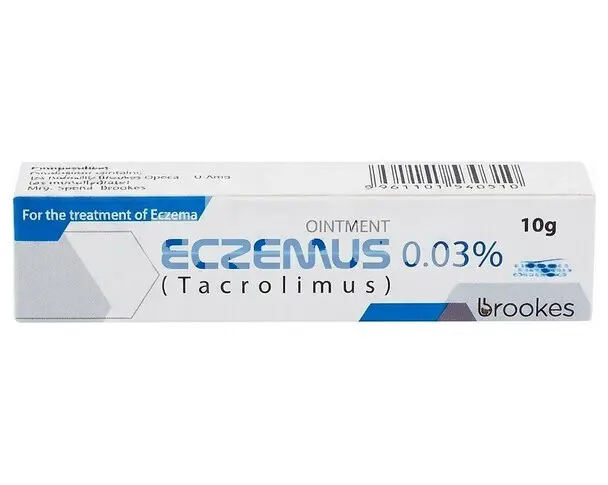
About Eczemus ointment
Eczemus ointment is a steroid free tacrolimus cream used to control moderate to severe eczema flare ups.
Eczemus ointment Uses
- Treats moderate to severe atopic dermatitis (eczema) in adults and children over 2 years
- Used for short term flare up control and intermittent long term maintenance therapy
- Prescribed when topical steroids have failed or are not advisable for the affected skin area
- Applied on face, neck and skin folds where steroid creams are usually avoided
Eczemus ointment Benefits
- Reduces itching, redness and inflammation of eczema patches
- Does not cause skin thinning that long term steroid use can cause
- Safe for sensitive areas like eyelids and around the mouth
- Helps extend the gap between eczema flare ups when used as maintenance therapy
What Experts Say
Tacrolimus belongs to a class of medicines called calcineurin inhibitors. It works by blocking a protein called calcineurin inside skin immune cells, which lowers the release of inflammatory chemicals that cause eczema symptoms. This mechanism controls inflammation without thinning the skin, which is a common side effect of long term topical steroid use.
Clinical trials have shown tacrolimus ointment is effective for moderate to severe atopic dermatitis in both children above two years and adults. It is considered a second line option once regular moisturizers and mild steroid creams are not enough to control symptoms. Studies also support its use as a twice weekly maintenance treatment to reduce flare frequency in chronic cases.
Dermatologists usually start patients with the correct strength based on age, using 0.03% for children and 0.1% for adults. A mild burning or warming sensation is common in the first few days and usually settles with continued use. Doctors advise sun protection during treatment since the skin becomes more sensitive to UV exposure.
Drug Class
- Topical calcineurin inhibitor
- Immunomodulator
- Non steroidal eczema treatment
Eczemus ointment Uses in Urdu
- ایگزیما یعنی خارش اور جلن والی جلد کی سوزش کے علاج کے لیے
- ان مریضوں کے لیے جن پر سٹیرائیڈ کریمیں مؤثر نہ ہوں یا موزوں نہ ہوں
- چہرے، گردن اور جلد کی نازک تہوں پر استعمال کے لیے موزوں
- بار بار ہونے والی ایگزیما کی شدت کو کم کرنے کے لیے طویل مدتی دیکھ بھال میں
Available forms
- Ointment 0.03% (10g tube, pediatric strength)
- Ointment 0.1% (10g tube, adult strength)
How to use Eczemus ointment?
- Wash and pat dry the affected skin area before application
- Apply a thin layer of Eczemus ointment and gently rub it in until absorbed
- Use twice daily during active flare ups, or as directed by the doctor
- Wash hands after application unless hands are the area being treated
- Avoid covering the treated area with tight bandages or occlusive dressings
- Avoid sun exposure and tanning beds on treated skin
- Continue use for the duration advised by the doctor even if symptoms improve early
Drug Interactions
- Other topical products: Avoid applying other creams or ointments on the same area at the same time unless advised by a doctor
- Live vaccines: Discuss vaccination schedules with a doctor since tacrolimus affects local immune response
- CYP3A4 inhibitors: Oral drugs like ketoconazole and erythromycin may theoretically increase systemic tacrolimus absorption with extensive use
- Alcohol: Alcohol consumption may cause skin flushing or redness in some patients using tacrolimus ointment
- Phototherapy: Combining with UV light therapy for skin conditions is generally avoided
Risks and warnings
- Sun sensitivity: Treated skin becomes more sensitive to sunlight and UV exposure should be minimized
- Not for infected skin: Should not be applied over skin infections until the infection is treated
- Burning sensation: A temporary burning or warming feeling at the application site is common initially
- Long term safety: Regulatory agencies advise using the lowest effective amount for the shortest duration needed
- Not for children under 2: Safety in children below two years has not been established
- Avoid eyes and mouth: Should not be applied inside the eyes, nose or mouth
- Immune suppression: Long term extensive use may lower local skin immune response, so doctor follow up is advised
Eczemus ointment Side Effects
- Burning or stinging at the application site
- Skin redness or warmth
- Itching that may temporarily worsen
- Headache
- Flu like symptoms
- Mild acne like breakouts near the application area
- Increased sensitivity to sunlight
- Rarely, signs of skin infection such as pus or swelling
Storage Conditions
- Store at room temperature between 15°C and 30°C
- Keep the tube tightly closed when not in use
- Store away from direct sunlight and moisture
- Keep out of reach of children
- Do not use after the expiry date printed on the pack