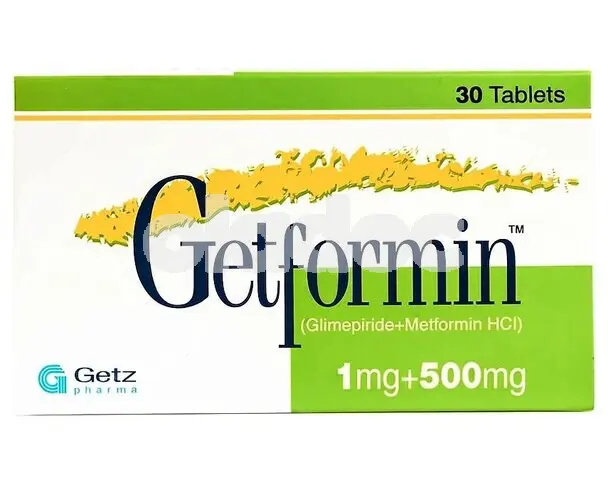
About Getformin Tablet 1mg / 500mg
Getformin Tablet contains Glimepiride and Metformin, a combination used to manage type 2 diabetes.
Getformin Tablet 1mg / 500mg Uses
- Controls high blood sugar levels in type 2 diabetes mellitus
- Used when diet, exercise, and a single antidiabetic medicine are not enough to control blood sugar
- Combines two complementary mechanisms for tighter glycemic control
- Supports reduction of long-term diabetes complications when blood sugar stays well controlled
- May be prescribed as a step-up therapy after metformin alone stops working well
Getformin Tablet 1mg / 500mg Benefits
- Combines a sulfonylurea and a biguanide in a single tablet for easier dosing
- Glimepiride stimulates the pancreas to release more insulin
- Metformin reduces liver glucose production and improves insulin sensitivity
- Fixed dosing schedule can improve treatment adherence
- Fixed-dose combination can be more convenient than taking two separate tablets
What Experts Say
Glimepiride and metformin work through two complementary mechanisms in this combination. Glimepiride is a sulfonylurea that stimulates pancreatic beta cells to release more insulin, while metformin, a biguanide, reduces glucose production by the liver and improves how sensitive body tissues are to insulin.
Physicians typically prescribe this combination once metformin alone no longer achieves the target HbA1c, since pairing an insulin secretagogue with an insulin sensitizer often controls blood sugar better than simply raising the metformin dose. Doctors usually advise taking it with the first main meal, since food intake helps align the glimepiride dose with a lower hypoglycemia risk and eases metformin related stomach upset.
Regular monitoring of blood glucose, kidney function, and HbA1c is recommended during treatment. Glimepiride carries a genuine hypoglycemia risk, particularly if a meal is skipped or alcohol is consumed, while metformin needs periodic renal function checks because reduced kidney function raises the risk of a rare but serious complication called lactic acidosis.
Drug Class
- Sulfonylurea and Biguanide Combination (Oral Antidiabetic)
Getformin Tablet 1mg / 500mg Uses in Urdu
- ٹائپ ٹو ذیابیطس میں خون میں شوگر کی سطح کو کنٹرول کرتی ہے
- جب اکیلی دوا سے شوگر کنٹرول نہ ہو تو استعمال کی جاتی ہے
- لبلبے سے انسولین کے اخراج کو بڑھاتی ہے
- جگر میں گلوکوز کی پیداوار کو کم کرتی ہے
- جسم کو انسولین کے لیے زیادہ حساس بناتی ہے
Getformin Tablet 1mg / 500mg formula
- Glimepiride + Metformin Hydrochloride
How to use Getformin Tablet 1mg / 500mg?
- Take exactly as prescribed by the doctor, usually once daily with the first main meal of the day
- Swallow the tablet whole with a full glass of water
- Do not skip a meal after taking this tablet, since it can cause low blood sugar
- Do not double the dose if a dose is missed, take the next dose at the usual time
- Continue regular blood sugar monitoring as advised by the doctor
Drug Interactions
- Insulin and other antidiabetic drugs: Combined use increases the risk of hypoglycemia
- Alcohol: Raises the risk of low blood sugar and lactic acidosis
- Beta blockers: Can mask the warning signs of hypoglycemia, such as a fast heartbeat
- Corticosteroids: Can raise blood sugar and reduce the drug's effectiveness
- NSAIDs: May increase the blood sugar lowering effect and hypoglycemia risk
- Iodinated contrast dye: Increases the risk of kidney injury and lactic acidosis when combined with metformin
- Diuretics: Can reduce the blood sugar lowering effect and affect kidney function
Risks and warnings
- Hypoglycemia: Glimepiride can cause low blood sugar, especially if a meal is skipped, alcohol is consumed, or exercise is more intense than usual
- Kidney impairment: Metformin should be avoided or dose-adjusted in moderate to severe kidney disease due to the risk of lactic acidosis
- Liver disease: Use with caution, as impaired liver function raises the risk of low blood sugar and lactic acidosis
- Elderly patients: Higher risk of hypoglycemia, dose should be started low and adjusted carefully
- Pregnancy and breastfeeding: Not generally recommended, insulin is usually preferred to control blood sugar
- Surgery or contrast imaging: Metformin is usually paused before and after procedures using iodinated contrast dye
- G6PD deficiency or sulfa allergy: Discuss with the doctor before starting glimepiride
Getformin Tablet 1mg / 500mg Side Effects
- Low blood sugar (hypoglycemia)
- Nausea or upset stomach
- Diarrhea
- Loss of appetite
- Metallic taste in the mouth
- Headache
- Dizziness
- Weight gain
- Skin rash (rare)
- Vitamin B12 deficiency with long-term use
Storage Conditions
- Store below 30°C in a cool, dry place
- Protect from light and moisture
- Keep the tablet in its original blister pack until it is time to take it
- Keep out of reach of children
- Do not use after the expiry date