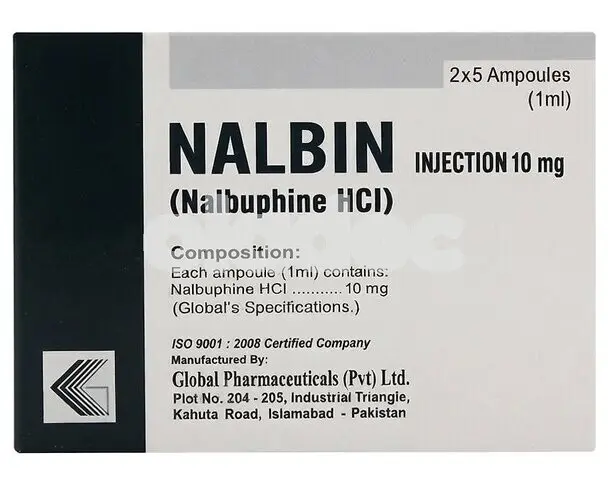
About Nalbin Injection 10mg
Nalbuphine is an opioid agonist antagonist analgesic used for moderate pain relief during labor and surgery.
Nalbin Injection 10mg Uses
- Moderate to severe pain relief in adults
- Obstetric analgesia during labor and delivery
- Pre-anesthetic medication before minor surgery
- Adjunct to balanced anesthesia during procedures
- Pain management for patients needing a lower opioid dose, such as elderly patients
Nalbin Injection 10mg Benefits
- Effective analgesia with a comparatively mild sedation profile
- Lower respiratory depression risk than equivalent doses of pure opioid agonists
- Flexible dosing option for patients sensitive to stronger opioid strengths
What Experts Say
Nalbuphine works as an opioid agonist antagonist, stimulating kappa receptors for analgesia while partially blocking mu receptors. This dual action gives Nalbin Injection 10mg a comparatively favorable safety profile, with less respiratory suppression than pure opioid agonists at equivalent analgesic doses.
The 10mg strength is commonly used as an initial or lower range dose, suitable for patients who need effective pain relief without the higher sedation load associated with stronger doses. It is frequently chosen for obstetric analgesia and as a pre-anesthetic agent before minor procedures.
Because nalbuphine can trigger withdrawal in opioid-dependent individuals, experts recommend confirming a patient's opioid history before use. Renal or hepatic impairment, elderly age, and concurrent central nervous system depressants all call for closer monitoring even at this lower dose.
Nalbin Injection 10mg Uses in Urdu
- درمیانے سے شدید درد میں آرام کے لیے
- زچگی کے دوران درد کم کرنے کے لیے
- چھوٹی سرجری سے پہلے دوا کے طور پر
- اینستھیزیا کے ساتھ درد کنٹرول کرنے کے لیے
- بزرگ مریضوں میں کم مقدار میں درد کے علاج کے لیے
Nalbin Injection 10mg formula
How to use Nalbin Injection 10mg?
- Administered by a healthcare professional only, never self-injected at home
- Given by intramuscular, intravenous, or subcutaneous injection
- Usual adult dose is 10mg per injection, repeated every 3 to 6 hours as needed
- Maximum single dose is 20mg, with a maximum daily dose of 160mg
- For intravenous use, the injection is given slowly to reduce the risk of dizziness
- Dose is adjusted for elderly patients or those with liver or kidney impairment
Drug Interactions
- Other Opioid Analgesics: May reduce the pain relieving effect of pure opioid agonists and can trigger withdrawal in opioid-dependent patients
- Central Nervous System Depressants: Alcohol, benzodiazepines, and sleeping pills increase the risk of severe sedation and slowed breathing
- Monoamine Oxidase Inhibitors: May cause unpredictable and severe reactions when combined
- Muscle Relaxants: Combined use raises the risk of excessive respiratory depression
- Other Sedating Medicines: Antihistamines and antipsychotics can add to drowsiness and dizziness
Risks and warnings
- Respiratory Depression: High doses or combination with other sedatives can slow breathing to a dangerous level
- Dependence Risk: Prolonged use can lead to physical dependence, so it is used only when medically necessary
- Opioid Withdrawal: Can trigger withdrawal symptoms in patients already dependent on other opioids
- Pregnancy and Breastfeeding: Use only under strict medical supervision, as it crosses the placenta and passes into breast milk
- CNS Depression: Combining with alcohol, sedatives, or sleeping pills increases the risk of extreme drowsiness
- Driving and Machinery: Causes dizziness and sedation, so patients should avoid driving after the injection
- Hepatic or Renal Impairment: Requires dose adjustment and closer monitoring in patients with liver or kidney disease
- Head Injury: Caution advised in patients with head injury, as sedation can mask changes in consciousness
Nalbin Injection 10mg Side Effects
- Sedation and drowsiness
- Dizziness or lightheadedness
- Nausea and vomiting
- Dry mouth
- Sweating and clammy skin
- Headache
- Low blood pressure or slow heart rate
- Confusion or unusual dreams in sensitive patients
- Difficulty breathing at high doses
- Injection site pain or irritation
Storage Conditions
- Store below 25 degrees Celsius, away from direct sunlight
- Keep ampoules in their original packaging until ready to use
- Do not freeze the injection solution
- Keep out of reach of children at all times
- Discard any opened or unused ampoule after use, do not reuse
- Do not use if the solution appears discolored or contains particles