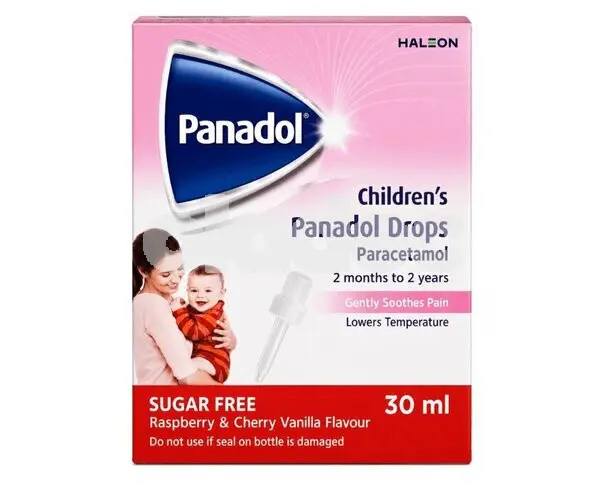
About Panadol Drops
Panadol drops reduce fever and relieve mild pain in infants and young children.
Panadol Drops Uses
- Used for reducing fever in infants from 2 months of age
- Effective against mild to moderate pain from teething in young children
- Indicated for fever following routine childhood vaccinations
- Treats earache caused by middle ear infections in infants
- Helpful in managing discomfort from sore throat in young children
- Chosen for post-vaccination pyrexia as a safe first-line option
- Approved for general pain relief in infants who cannot take solid medicines
Panadol Drops Uses in Urdu
- پینا ڈول ڈراپس بچوں میں بخار کو کم کرنے کے لیے استعمال کی جاتی ہیں۔
- دانت نکلنے کے دوران ہونے والے درد اور تکلیف میں آرام دیتی ہیں۔
- ویکسین لگانے کے بعد ہونے والے بخار کے لیے دی جاتی ہیں۔
- کان کے درمیانی انفیکشن کی وجہ سے ہونے والے کان کے درد میں کام آتی ہیں۔
- گلے کی تکلیف اور خراش میں شیر خوار بچوں کو آرام پہنچاتی ہیں۔
Panadol Drops formula
Paracetamol 80mg/0.8ml
How to use Panadol Drops?
- Panadol drops can be given directly by mouth using the dropper provided
- Measure the correct dose using the dropper before giving it to the child
- The dropper delivers one full dose of Panadol drops at the marked line
- Do not exceed 4 doses of Panadol drops in any 24 hours
- Do not give Panadol drops for more than 48 hours without a doctor's advice
Contraindications
- Diagnosed allergy to paracetamol or any ingredient in the drops
- Allergy to hydroxybenzoates, which are preservatives in the drops formula
- Infants under 2 months of age, unless prescribed by a doctor
- Hereditary conditions affecting fructose metabolism, if excipients are present
Drug Interactions
- Warfarin: Paracetamol may increase the blood-thinning effect of warfarin with regular use.
- Anticonvulsants (e.g., phenytoin, carbamazepine): These medicines can reduce the effectiveness of paracetamol and increase liver stress.
- Metoclopramide: This medicine increases the rate at which paracetamol is absorbed into the body.
- Other paracetamol-containing products: Giving Panadol drops alongside cold or flu medicines that also contain paracetamol raises the risk of accidental overdose.
- Chloramphenicol: Paracetamol may increase the levels of this antibiotic in the blood.
Risks and warnings
- Liver disease: Panadol drops must be used with caution in children with any liver condition.
- Kidney problems: A doctor must be consulted before giving these drops to children with kidney disease.
- Multiple paracetamol products: Do not give Panadol drops alongside any other cold, flu, or pain medicine containing paracetamol.
- Prolonged use: Panadol drops must not be used for more than 48 hours without a doctor's guidance.
- Low body weight: Dosage must be calculated carefully by weight in premature or very small infants.
- Pregnancy: The safety profile of paracetamol in pregnancy is generally considered acceptable, but a doctor must be consulted.
- Breastfeeding: Paracetamol passes into breast milk in small amounts and is generally considered safe at recommended doses.
Panadol Drops Side Effects
- Nausea or stomach discomfort
- Skin rash or redness
- Itching or hives
- Swelling of the face, lips, or throat
- Difficulty breathing, which may indicate an allergic reaction
- Liver problems with long-term use or accidental overdose
- Low platelet count, reported in rare cases
- Bronchospasm in children sensitive to NSAIDs
Storage Conditions
- Store at room temperature, below 25°C
- Keep away from direct sunlight, heat, and moisture
- Keep out of reach of children and pets