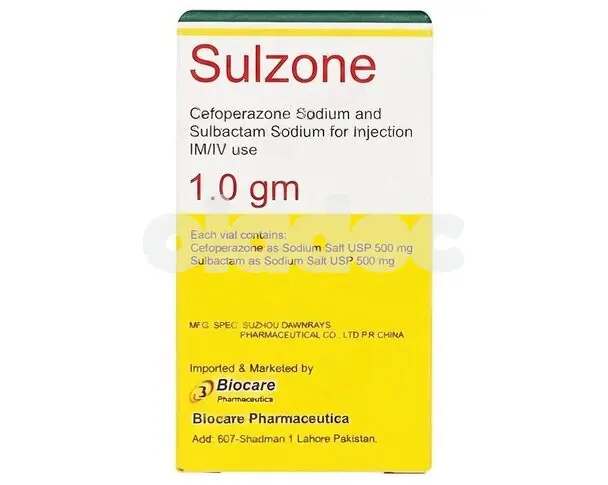
About Suzone Injection 1000mg/1000mg
A hospital administered antibiotic injection that combines cefoperazone with sulbactam for severe infections.
Suzone Injection 1000mg/1000mg Uses
- Serious respiratory tract infections, including pneumonia
- Complicated urinary tract infections
- Intra abdominal infections such as peritonitis and cholecystitis
- Skin, soft tissue, and bone infections caused by susceptible bacteria
Suzone Injection 1000mg/1000mg Benefits
- Sulbactam protects cefoperazone from bacterial enzymes that would otherwise destroy it
- Broad coverage against many gram negative and some gram positive bacteria
- Useful for hospitalized patients with infections resistant to simpler antibiotics
- Can be tailored in dose and frequency based on infection severity
What Experts Say
Cefoperazone is a third generation cephalosporin antibiotic. It works by interfering with bacterial cell wall formation, which causes susceptible bacteria to weaken and die during active growth rather than simply stopping them from multiplying further inside the body.
Sulbactam on its own has limited antibacterial activity, but it blocks beta lactamase enzymes that many resistant bacteria use to break down cephalosporins. Combining the two restores cefoperazone's effectiveness against bacteria that would otherwise resist it entirely on their own, widening the range of infections it can treat.
This injection is generally reserved for moderate to severe infections managed in a hospital setting, where intravenous or intramuscular administration and close monitoring of response and side effects are possible throughout the full treatment course under nursing supervision and regular clinical review.
Drug Class
- Third generation cephalosporin combined with a beta lactamase inhibitor
- Broad spectrum injectable antibiotic
Suzone Injection 1000mg/1000mg Uses in Urdu
- سانس کی نالی کے شدید انفیکشن جیسے نمونیا میں استعمال ہوتی ہے
- پیشاب کی نالی کے پیچیدہ انفیکشن میں دی جاتی ہے
- پیٹ کے اندرونی انفیکشن جیسے پیریٹونائٹس میں مؤثر ہے
- جلد اور ہڈیوں کے سنگین بیکٹیریل انفیکشن میں ہسپتال میں استعمال ہوتی ہے
Suzone Injection 1000mg/1000mg formula
How to use Suzone Injection 1000mg/1000mg?
- This injection is administered only by a doctor or trained healthcare professional in a clinical setting
- Dosing and frequency depend on the type and severity of infection, patient weight, and kidney function
- A complete course is finished exactly as prescribed, even if symptoms improve early
- Vital signs and injection site reactions are monitored during and after administration
Drug Interactions
- Alcohol: Can trigger a disulfiram like reaction with flushing, nausea, and a rapid heartbeat during and after treatment
- Anticoagulants: Combined use raises the risk of bleeding due to cefoperazone's effect on clotting factors
- Other nephrotoxic drugs: Combining with certain other antibiotics or diuretics can increase strain on the kidneys
- Live bacterial vaccines: Antibiotic therapy can reduce the effectiveness of live vaccines given around the same time
Risks and warnings
- Penicillin or cephalosporin allergy: A known allergy to these antibiotic classes raises the risk of a serious reaction with this injection
- Bleeding risk: Cefoperazone can affect vitamin K dependent clotting factors, so patients on blood thinners need monitoring
- Alcohol: Alcohol taken during and shortly after treatment can cause a severe reaction with flushing and vomiting
- Kidney or liver disease: Existing organ impairment may need a dose adjustment
- Prolonged use: Extended antibiotic courses can lead to overgrowth of resistant organisms or fungal infection
Suzone Injection 1000mg/1000mg Side Effects
- Pain or swelling at the injection site
- Nausea or diarrhea
- Skin rash
- Headache
- Changes in blood clotting tests with prolonged use
- Severe diarrhea from Clostridioides difficile infection has been reported with extended antibiotic courses
- Signs of a serious allergic reaction, such as facial swelling or difficulty breathing, need emergency care
Storage Conditions
- Store the unopened vial below 25 degrees Celsius, protected from light
- Keep reconstituted solution refrigerated and use within the time stated by the pharmacist
- Avoid freezing the reconstituted solution
- Keep out of reach of children