


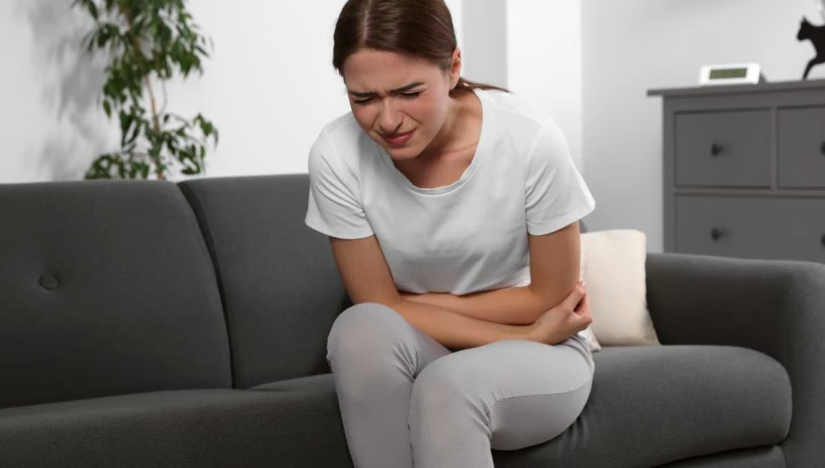
Pelvic pain that won’t go away is more common than most people realize. Many patients in Pakistan spend months, sometimes years, trying to figure out what is wrong.
The discomfort sits deep in the lower abdomen, below the belly button. It can be constant, or it can come and go without a clear pattern.
This article explains what chronic pelvic pain is, why it happens, and what can be done about it.
Table of Contents
Key Takeaways
- Chronic pelvic pain lasts at least 6 months and can affect both men and women
- It often has more than one underlying cause
- A proper diagnosis usually requires multiple tests, not just one
- Treatment works best when it targets the specific cause
- Seeing a specialist early leads to better outcomes
What Is Chronic Pelvic Pain?
Chronic pelvic pain is ongoing pain in the lower part of the abdomen and pelvis. It lasts for at least 6 months. The pain may be steady or come in waves, and it can range from a dull ache to a sharp, stabbing sensation. It is not a disease on its own. It is a symptom pointing to one or more underlying conditions that need investigation.
Common Symptoms
The pain itself is the main symptom, but chronic pelvic pain often comes with other signs that help identify the cause.
People commonly report:
- Dull, heavy pressure in the lower abdomen that stays for weeks
- Sharp pain that flares during certain activities, such as sitting for long periods
- Pain during or after sex (more common in women)
- Pain during urination or bowel movements
- Lower back pain that spreads into the hips or thighs
- Painful periods that are worse than usual
Not every person experiences all of these. The combination of symptoms is usually what points the doctor toward the right diagnosis.
What Causes Chronic Pelvic Pain?
This condition rarely has a single cause. In many cases, more than one problem is happening at the same time.
Causes in Women
- Endometriosis is one of the most common causes in women of reproductive age. Tissue similar to the uterine lining grows outside the uterus, causing pain that often gets worse around the time of a period.
- Pelvic inflammatory disease (PID) is an infection of the reproductive organs. It is usually caused by a bacterial infection that spreads upward from the vagina. If left untreated, it can cause lasting damage and chronic pain.
- Uterine fibroids are non-cancerous growths inside or around the uterus. They do not always cause symptoms, but when they do, pelvic pressure and heavy bleeding are common complaints.
- Ovarian cysts can form on one or both ovaries. Smaller cysts often go unnoticed, but larger ones can cause dull or sharp pelvic pain.
- Adenomyosis occurs when uterine lining tissue grows into the wall of the uterus itself. This causes the uterus to enlarge and leads to painful, heavy periods and deep pelvic pressure.
Causes in Men
Chronic pelvic pain in men is less talked about but just as real.
- Chronic prostatitis is inflammation of the prostate gland. It is a leading cause of pelvic pain in men under 50. The pain may be felt in the perineum, lower abdomen, or during urination.
- Bladder conditions, such as interstitial cystitis, affect both men and women. The bladder becomes inflamed and irritated, leading to frequent, painful urination and pelvic discomfort.
Causes Affecting Both Men and Women
- Irritable bowel syndrome (IBS) causes cramping, bloating, and abdominal pain. The gut-related pain is often felt in the pelvic area and can mimic other pelvic conditions.
- Pelvic floor dysfunction happens when the muscles of the pelvic floor become too tight or too weak. These muscles support the bladder, bowel, and uterus. When they do not work properly, they can cause significant pain with sitting, exercise, or sexual activity.
- Nerve-related pain is sometimes responsible when no structural cause is found. Damaged or irritated nerves in the pelvic region can produce constant burning or stabbing sensations.
How Is Chronic Pelvic Pain Diagnosed?
Diagnosis takes time because the causes are so varied. A doctor will usually start with a detailed history of the pain: when it started, what makes it better or worse, and whether it relates to the menstrual cycle, urination, or bowel habits.
A physical examination follows. In women, a pelvic exam is standard. In men, a rectal or prostate exam may be done.
Beyond the physical exam, common investigations include:
- Ultrasound to check the reproductive organs, bladder, and kidneys
- Blood tests to look for infection or hormonal imbalances
- Urine tests to rule out urinary tract infections
- Laparoscopy, a small surgical procedure used in women to look inside the pelvis and confirm conditions like endometriosis
In some cases, a colonoscopy or CT scan may be requested. Diagnosis is rarely a one-test process. Patience is an important part of getting to the right answer.
Treatment Options
Treatment depends entirely on the cause. There is no single fix for chronic pelvic pain.
Medications
Pain relievers, such as ibuprofen or paracetamol, can help manage day-to-day discomfort. Hormonal treatments, including contraceptive pills or hormone injections, are often prescribed for conditions like endometriosis or fibroids. Antibiotics are used when an active infection is the cause.
Physical Therapy
Pelvic floor physical therapy has strong evidence behind it. A trained physiotherapist can guide patients through exercises that relax or strengthen the pelvic muscles, depending on the problem. This approach is underused in Pakistan but is increasingly available in major cities.
Surgical Options
Surgery may be recommended when medication does not provide enough relief. For endometriosis, a laparoscopy can remove or destroy the abnormal tissue. Fibroids can be removed through a procedure called myomectomy. In more severe cases, a hysterectomy may be discussed.
Psychological Support
Long-term pain takes a toll on mental health. Anxiety and depression are common in people with chronic pelvic pain. Cognitive behavioral therapy (CBT) has been shown to help patients manage pain responses and improve quality of life. Treating the emotional side of chronic pain is as important as treating the physical cause.
Lifestyle Adjustments
Dietary changes can help with IBS-related pelvic pain. Reducing trigger foods, staying well-hydrated, and eating regular meals all support gut health. Regular, gentle exercise, such as walking or yoga, can also reduce pain levels over time.
When to Consult a Specialist
Pelvic pain that has lasted more than 6 weeks should not be ignored. This is especially true if the pain disrupts sleep, makes daily tasks difficult, or is getting worse over time.
A gynecologist is usually the right first specialist for women. Men experiencing pelvic pain should start with a urologist or general physician who can refer them appropriately.
Experienced gynecologists are available for consultation in Lahore and other major cities across Pakistan on oladoc.
Conclusion
Chronic pelvic pain is a real, treatable condition. The key to getting better is identifying the right cause, which often means seeing more than one specialist and undergoing more than one test. Early diagnosis leads to faster, more effective treatment. Living with this pain is not something anyone should have to accept without answers.
Frequently Asked Questions
How long does pelvic pain need to last before it is considered chronic?
Pelvic pain is considered chronic when it lasts for 6 months or more. Pain that has been present for several weeks and is not improving should still be assessed by a doctor.
Can men get chronic pelvic pain?
Yes. Men can develop chronic pelvic pain, most often due to chronic prostatitis or bladder conditions. The condition is underdiagnosed in men because it is less commonly discussed.
Is chronic pelvic pain always related to the reproductive system?
No. While reproductive conditions are a common cause in women, chronic pelvic pain can also stem from the bowel, bladder, pelvic floor muscles, or nerves. In some cases, no single cause is found.
Can chronic pelvic pain go away on its own?
In some cases, mild pelvic pain does improve without treatment. However, pain lasting more than 6 months rarely resolves on its own. Medical evaluation is strongly recommended to identify and treat the underlying cause.
What type of doctor should I see for chronic pelvic pain?
Women should typically start with a gynecologist. Men should see a urologist or general physician. If a bowel or bladder condition is suspected, a gastroenterologist or nephrologist may also be involved in care.
Is chronic pelvic pain related to cancer?
In rare cases, pelvic pain can be a sign of ovarian, uterine, or colon cancer. However, the vast majority of chronic pelvic pain cases are caused by non-cancerous conditions. A doctor can order appropriate tests to rule out serious causes.