

Book Appointment with the best "Nutritionists"
Book AppointmentOne medium plain roti has about 120 calories. That is a homemade roti made from roughly 35 g of whole wheat atta, and it brings about 25 g of carbs, 4.6 g of protein and 3.7 g of fiber.
A small phulka sits near 85 calories, a big tandoori roti near 200, and every teaspoon of ghee on top adds about 37.
The same numbers apply to chapati, since it is the same flatbread made from the same atta. Roti sizes vary a lot from one home to the next, so this guide ties calories to the weight of your atta.
Below you will find the numbers for 1 roti, half a roti, 2 rotis and 3 rotis, what ghee and oil do to the total, and how roti stacks up against rice.
Key Takeaways
- One medium plain roti (about 35 g of whole wheat atta) has roughly 120 calories.
- Calories follow atta weight: a small phulka is about 85 calories and a large tandoori roti is about 204.
- One teaspoon of ghee adds about 37 calories and one tablespoon adds about 112.
- One medium roti gives about 25 g of carbohydrates, 4.6 g of protein and 3.7 g of fiber, which is roughly 15% of the 25 g of fiber WHO recommends each day.
- Two plain rotis come to about 240 calories. One cup of cooked white rice has about 205 calories and under 1 g of fiber.
- Whole wheat roti had a glycemic index of about 45 in one published study, but portion size still decides what happens to your blood sugar.
How Many Calories In One Roti?
The number depends on how much atta goes into the dough. Whole wheat flour has 340 calories per 100 g, so each gram of dry atta adds 3.4 calories.
Water in the dough makes the cooked roti heavier but adds no calories, so weigh the atta before you knead, not the roti after you cook it.
The sizes below are typical atta weights for each type of roti. Your own roti may be a little smaller or bigger, so use the closest row.
| Roti Size | Atta Used | Calories |
|---|---|---|
| Small phulka | 25 g | 85 |
| Thin small roti | 30 g | 102 |
| Medium home roti | 35 g | 119 |
| Medium to large roti | 40 g | 136 |
| Large roti | 50 g | 170 |
| Tandoori or dhaba roti | 60 g | 204 |
Every figure here is the atta weight multiplied by the USDA value of 340 calories per 100 g for whole grain wheat flour. If your roti covers a whole dinner plate, start from the 50 g or 60 g row.
Calories In One Roti
One medium roti made from 35 g of atta has about 119 calories, with 25.2 g of carbs and 4.6 g of protein. It is the number most people mean when they ask about one roti.
Here is how that portion compares with larger and smaller servings.
| Portion | Calories | Carbohydrates | Protein |
|---|---|---|---|
| Half roti | 60 | 12.6 g | 2.3 g |
| 1 roti | 119 | 25.2 g | 4.6 g |
| 2 rotis | 238 | 50.4 g | 9.2 g |
| 3 rotis | 357 | 75.6 g | 13.9 g |
| 4 rotis | 476 | 100.8 g | 18.5 g |
Half Roti Calories
Half a medium roti has about 60 calories, 12.6 g of carbs and 2.3 g of protein. This is a handy portion if you want a little roti to finish a plate of daal or sabzi.
2 Roti Calories
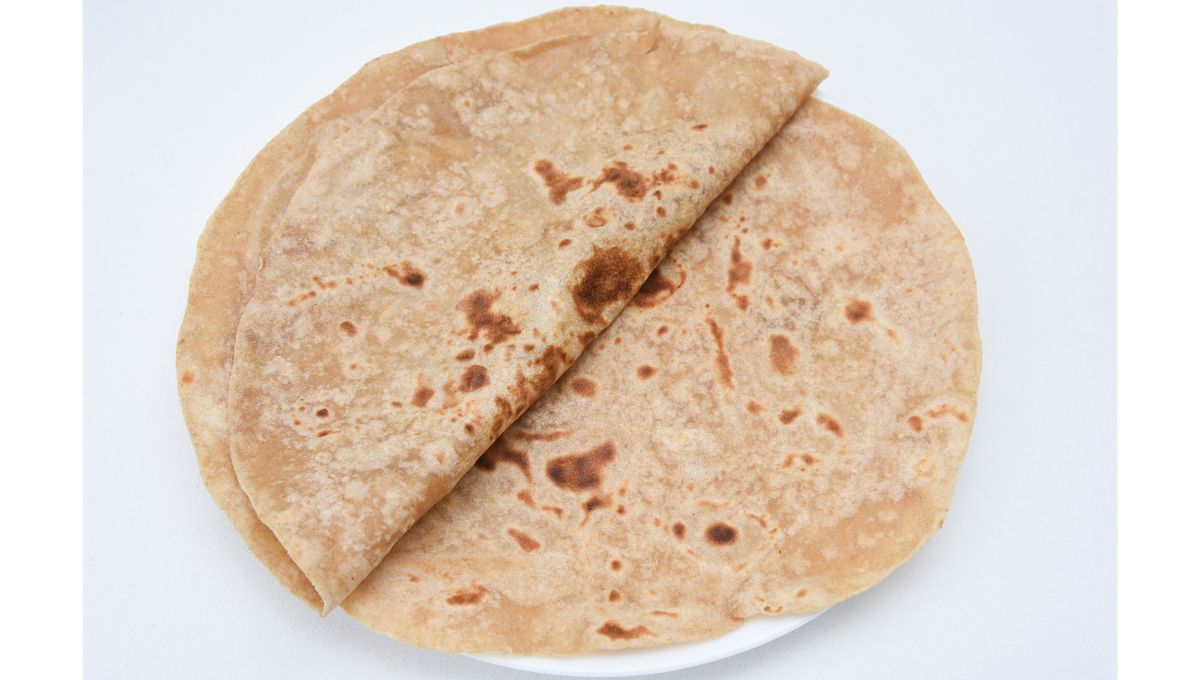
Two medium rotis have about 238 calories, 50.4 g of carbs and 9.2 g of protein. With a teaspoon of ghee on each, the total rises to about 312.
3 Roti Calories
Three medium rotis have about 357 calories, 75.6 g of carbs and 13.9 g of protein. That is roughly 18% of a 2,000 calorie day before you count the ghee, salan or anything else on the plate.
1 Chapati Calories
One chapati has the same calories as a roti of the same size, about 119 for a medium one. Chapati and roti are made from the same whole wheat atta, so only the weight of the atta changes the number.
A thinner, smaller chapati made from 25 g of atta is about 85 calories, while a thick one made from 50 g is about 170.
Roti Nutrition Facts
Roti is mostly carbohydrate, but because atta is whole wheat it also carries fiber, protein and iron. This is what one medium roti (35 g of atta) gives you, worked out from the USDA values for whole grain wheat flour.
| Nutrient | 1 Medium Roti |
|---|---|
| Calories | 119 |
| Carbohydrates | 25.2 g |
| Protein | 4.6 g |
| Fiber | 3.7 g |
| Fat | 0.9 g |
| Iron | 1.3 mg |
Protein In 1 Roti
One medium roti has about 4.6 g of protein, so three rotis give close to 14 g. Useful, but roti should not be your main protein. Eat it with daal, chana, eggs, chicken or yogurt.
Carbs In One Roti
One medium roti has about 25 g of carbs. Two rotis come to roughly 50 g, which is the number to watch if you count carbs for diabetes.
Fiber In Roti
One medium roti has 3.7 g of fiber, or about 15% of the at least 25 g a day WHO recommends for everyone over 10.
WHO also says most carbohydrates should come from whole grains, vegetables, fruit and legumes, and a whole wheat roti with daal and sabzi is exactly that kind of plate.
For Pakistani households this matters more than it might elsewhere. A 2017 estimate put wheat flour at about 72% of the country’s daily calories, with average consumption around 96 kg per person a year.
Your roti is the biggest single part of your diet, so it is worth getting right.
Wheat Roti Calories Per 100 g
“Roti calories per 100 g” can mean two things, the dry flour or the cooked roti, and they are not the same because cooked roti holds water.
- Whole wheat flour (atta): 340 calories per 100 g, with 13.2 g of protein, 72 g of carbohydrates and 10.7 g of fiber, according to the USDA FoodData Central entry for whole grain wheat flour.
- Packaged ready made roti: The USDA lists plain commercial roti at 297 calories per 100 g, with 7.45 g of fat and 409 mg of sodium. One 68 g piece has about 200 calories and 5 g of fat.
A homemade roti cooked on a dry tawa has less than 1 g of fat, against 5 g in one packaged piece.
Roti With Ghee Calories
A medium roti with 1 teaspoon of ghee has about 156 calories, and one with 1 tablespoon has about 231. Ghee adds roughly 37 calories per teaspoon, so a spoon can almost double a plain roti.
| Roti Type | Added Calories | Total Calories |
|---|---|---|
| Plain roti on dry tawa | 0 | 119 |
| Roti with 1 teaspoon ghee | 37 | 156 |
| Roti with 1 tablespoon ghee | 112 | 231 |
Three rotis with a tablespoon of ghee each carry over 330 extra calories from the fat alone. A light brush on the roti, or a single teaspoon for the whole meal, keeps the flavor without the jump.
Roti With Oil Calories
A medium roti with 1 teaspoon of oil has about 159 calories, and one with 1 tablespoon has about 239. Oil adds roughly 40 calories per teaspoon, a little more than ghee.
| Roti Type | Added Calories | Total Calories |
|---|---|---|
| Roti with 1 teaspoon oil | 40 | 159 |
| Roti with 1 tablespoon oil | 120 | 239 |
Is Roti Good For Weight Loss?
Yes, roti can fit into a weight loss plan. Weight depends on your total calories across the day, not on roti alone. A plain whole wheat roti fills you up because of its fiber.
The extras are what usually push a meal over budget: ghee, oily salan, and a fourth or fifth roti eaten out of habit.
Logging what you eat makes this much easier.
The nutrition tracking and AI meal scanning in Fit by oladoc let you snap a photo of your plate and see the calories and macros, including local foods like roti and salan, so the ghee and the extra roti do not slip past you.
How Many Rotis Should You Eat In A Day?
There is no single right number. On a 2,000 calorie day, three plain medium rotis come to about 357 calories, roughly 18% of your intake, which leaves plenty of room for protein and vegetables.
Your own limit depends on your age, sex, weight and activity, so a desk worker needs a different count from a laborer or an athlete. A nutritionist in Lahore can turn your height, weight and routine into a daily roti number.
Whatever count you land on, these habits help:
- Decide how many rotis you will eat before you sit down, not halfway through the meal.
- Fill half the plate with sabzi, salad or daal and use roti to finish the meal.
- Count the ghee, the oil in the salan and any paratha as part of the meal, not as free extras.
Roti Glycemic Index
Roti has a fairly low glycemic index. In a British Journal of Nutrition study of 18 healthy volunteers, whole wheat roti had a glycemic index of about 45, which counts as low.
Low means blood sugar rises more slowly than it does with many refined foods.
A pooled analysis of eight observational studies covering more than 316,000 people also linked more whole grains to lower type 2 diabetes risk, with about 20% lower risk at 45 g of whole grains a day compared with 7.5 g.
That shows an association, not proof that roti prevents diabetes, and the glycemic index study was done in people without diabetes.
Is Roti Good For Diabetes?
About 26.7% of adults in Pakistan, roughly 33 million people, are estimated to have diabetes, so the question of whether roti is safe comes up a lot.
If you already have diabetes, a low glycemic index does not cancel out quantity. Two medium rotis carry about 50 g of carbohydrates, so how many you eat and what you eat with them still shape your readings.
Dr Fayaz Shawl, a clinical professor of medicine at George Washington University and an interventional cardiologist at Zulekha Hospital, made the same point in The Express Tribune: whole wheat roti still contains carbohydrate, and “neither allows unlimited portions.”
He also advises starting a meal with vegetables and protein before you reach for roti or rice.
Pairing roti with daal, vegetables or yogurt is a sensible habit. The dietitians in Karachi listed on oladoc can set a carb target that fits your medication and your blood sugar numbers.
Roti Vs Rice Calories
One roti has fewer calories than a cup of rice, but two rotis have slightly more. Fiber is where roti pulls ahead.
| Food | Calories | Carbohydrates | Fiber |
|---|---|---|---|
| 1 medium roti (35 g atta) | 119 | 25.2 g | 3.7 g |
| 2 medium rotis (70 g atta) | 238 | 50.4 g | 7.5 g |
| 1 cup cooked white rice (158 g) | 205 | 45 g | Under 1 g |
Two rotis give about 7.5 g of fiber while a cup of white rice gives under 1 g.
That fiber keeps you full for longer, so roti usually fills you up better per calorie, as long as you keep the portion in check.
5 Simple Ways To Cut Roti Calories
- Weigh your atta: Going from 50 g to 35 g of atta per roti saves about 51 calories each, which is about 153 a day if you eat three.
- Cook on a dry tawa: Skipping the ghee saves about 37 calories per teaspoon.
- Go easy on the salan oil: Each teaspoon of oil in your curry adds about 40 calories, so the roti is rarely the only place extra calories hide.
- Keep the bran: Use whole wheat atta, not refined flour, so you keep the fiber that fills you up.
- Pair with protein and vegetables: Daal, chana, eggs, chicken, sabzi and salad make two rotis feel like a full meal. A diet consultation in Islamabad can help you build these meals around your budget and taste.
Plan Your Rotis With A Nutritionist
Counting rotis only works if the number fits your body, your medication and your goal. Someone trying to lose 5 kg, a diabetic managing carbs at every meal and a gym goer building muscle all need different roti counts.
If you want a plan built around your own routine, book a visit with one of the weight loss nutritionists in Rawalpindi or consult online from any city.
Conclusion
A plain medium roti has about 120 calories, 25 g of carbohydrates, 4.6 g of protein and 3.7 g of fiber.
The number moves with your atta weight and the fat you add on top, and ghee or oil can add 37 to 120 calories per roti.
For most people, including those managing weight or blood sugar, whole wheat roti is a good staple when you control the portion and eat it with protein and vegetables.
Frequently Asked Questions
How Many Calories Are In One Roti?
A medium plain roti made from about 35 g of whole wheat atta has roughly 120 calories. A small phulka has about 85 and a large tandoori roti about 204. The count depends on the weight of the atta.
How Many Calories Are In 1 Chapati?
One chapati has the same calories as a roti of the same size, about 120 for a medium one. Chapati and roti are made from the same whole wheat atta, so only the atta weight changes the number.
How Many Calories Are In 2 Rotis?
Two medium plain rotis have about 238 calories, 50 g of carbohydrates and 9 g of protein. With a teaspoon of ghee on each, the total rises to about 312.
How Many Calories Are In Half A Roti?
Half a medium roti has about 60 calories, 12.6 g of carbohydrates and 2.3 g of protein.
How Many Calories Are In A Roti With Ghee?
A medium roti with 1 teaspoon of ghee has about 156 calories, and one with 1 tablespoon has about 231. Ghee adds roughly 37 calories per teaspoon.
How Many Calories Are In 100 g Of Roti?
Whole wheat flour has 340 calories per 100 g. The USDA lists packaged plain roti at 297 calories per 100 g. For homemade roti, count the weight of the dry atta rather than the cooked roti.
How Much Protein Is In 1 Roti?
One medium whole wheat roti has about 4.6 g of protein. Three rotis give close to 14 g, so pair them with daal, eggs, chicken or yogurt.
How Many Carbs Are In One Roti?
One medium whole wheat roti has about 25 g of carbohydrates and 3.7 g of fiber. Two rotis give about 50 g of carbs.
Is Roti Or Rice Better For Weight Loss?
Roti has more fiber, so it keeps you full for longer. One roti has fewer calories than one cup of cooked rice, but two rotis have a little more. Portion size matters more than the choice between them.
How Many Rotis Can I Eat In A Day?
It depends on your total calorie needs, which vary with age, sex, weight and activity. As an example, three plain medium rotis are about 357 calories, around 18% of a 2,000 calorie day.
A nutritionist can set a number that fits your goal.
Disclaimer: The contents of this article are intended to raise awareness about common health issues and should not be viewed as sound medical advice for your specific condition. You should always consult with a licensed medical practitioner prior to following any suggestions outlined in this article or adopting any treatment protocol based on the contents of this article.