




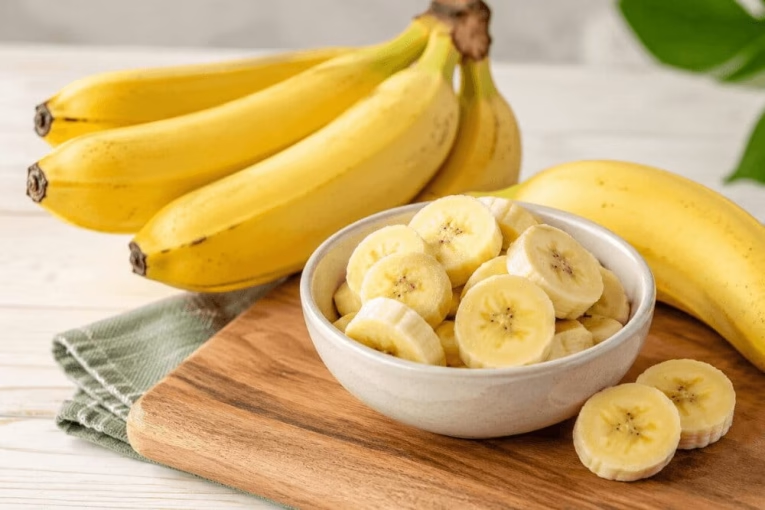
Many people include bananas in their diet without a clear picture of what the fruit contains nutritionally.
A closer look at the numbers reveals a fruit that is moderate in calories yet rich in essential nutrients.
This article covers the key nutritional data for bananas, from calories and protein to fiber and potassium, to help readers make informed decisions about how this fruit fits into their daily diet.
Table of Contents
How Many Calories Are in a Banana?
All numbers come from USDA FoodData Central, the most reliable nutrition database available.
A medium banana weighing around 118g contains approximately 105 calories.
About 93% of those calories come from carbohydrates, 4% from protein, and 3% from fat.
The exact count shifts depending on size, but for most people grabbing a standard banana, 100 to 105 calories are the right number to work with.
Banana calories by size (USDA)
| Size | Weight | Calories | Approx. Length |
| Extra small | 81g | 72 kcal | Under 15 cm |
| Small | 101g | 90 kcal | 15–18 cm |
| Medium | 118g | 105 kcal | 18–20 cm |
| Large | 136g | 121 kcal | 20–23 cm |
| Extra large | 152g | 135 kcal | 23 cm or more |
How Much Protein Does One Banana Contain?
A medium banana contains about 1.1 to 1.3 grams of protein. That covers roughly 2% of an average adult’s daily protein needs.
So no, a banana is not a protein source by any practical measure. However, it is not irrelevant either.
How Much Sugar Does A Banana Contain: Full Nutrition Breakdown
One medium banana delivers a surprisingly broad range of nutrients for such a simple food.
Nutrition facts per medium banana (118g) Source: USDA
| Nutrient | Amount | % Daily Value |
| Calories | 105 kcal | |
| Carbohydrates | 27g | 10% |
| Sugars (natural) | 14g | |
| Dietary fiber | 3.1g | 11% |
| Protein | 1.3g | 2% |
| Fat | 0.4g | < 1% |
| Potassium | 422mg | 12% |
| Vitamin B6 | 0.43mg | 33% |
| Vitamin C | 8.7mg | 10% |
| Magnesium | 32mg | 8% |
Three nutrients are worth calling out specifically.
Potassium
With 422mg per banana, potassium is the standout mineral here. One banana covers about 12% of the daily target.
Vitamin B6
A single banana covers roughly one-third of your daily vitamin B6 needs
Resistant starch
In a slightly green banana, a significant portion of the carbohydrates exist as resistant starch.
Research from Harvard T.H. Chan School of Public Health notes that resistant starch acts as a prebiotic, supporting gut microbiome health and improving satiety.
Banana Before or After a Workout?
Timing does matter here, though both options work well. The difference is in what you are trying to achieve.
Before a workout
A banana eaten 30 to 60 minutes before exercise provides quick, digestible carbohydrates that the muscles can use during training.
For most people, that is an easier and cheaper option than a commercial pre-workout supplement.
After a workout
After training, the body needs carbohydrates to replenish glycogen stores and protein to repair muscle.
A banana alone handles the carbohydrate side. Pairing it with a boiled egg, a cup of yogurt, or a small protein shake completes the picture.
The combination is practical, affordable, and available in any kitchen in Pakistan.
Simple Ways to Eat Banana Every Day
Banana does not need a recipe. Here are a few combinations that work well within a typical Pakistani diet:
- Morning fuel: Banana with a glass of full-fat or semi-skimmed milk before heading out. Simple, fast, and genuinely filling.
- Pre-gym shake: Banana blended with milk and a tablespoon of peanut butter. No powder needed.
- Midday snack: Banana sliced over yogurt with a small handful of almonds. High protein, good fiber, low processed sugar.
- Oats topping: Mashed into your morning oats instead of adding sugar. Adds natural sweetness and potassium.
- Summer cool-down: Frozen banana blended alone makes a creamy, one-ingredient dessert at around 100 calories. A useful swap for those cutting back on ice cream.
Who Should Be More Careful with Bananas?
For most healthy adults, one banana a day raises no concerns. A few specific groups may need to adjust.
- Kidney disease: At 422mg of potassium per banana, regular intake may push potassium levels higher than recommended for people on a potassium-restricted diet. A doctor or nephrologist should advise on appropriate portion size.
- Strict low-carb or ketogenic diet: One medium banana contains 27g of carbohydrates. On a keto plan with a 20 to 50g daily carb limit, a single banana uses up most of the allowance. Whether that trade-off is worth it depends on individual goals.
- Latex allergy: Proteins in bananas can trigger a cross-reaction in people with latex sensitivity. If you notice itching or swelling after eating banana, this is worth discussing with a doctor.
If you have diabetes or are pre-diabetic and want a meal plan built around your actual lab results, a registered nutritionist or dietitian can give you clarity that no article can.
Take advise from nutritionist in Lahore, and other major cities in Pakistan for a personalized meal plan.
Takeaway
A medium banana has about 105 calories, 1.3g of protein, 27g of carbohydrates, and a meaningful amount of potassium, vitamin B6, and fiber. It is not a protein source, but it is one of the most nutrient-dense low-cost snacks available.
For specific conditions like diabetes or kidney disease, portion size and food pairing matter more than avoidance.
If your health situation is more complex, always consult with a qualified nutritionist
