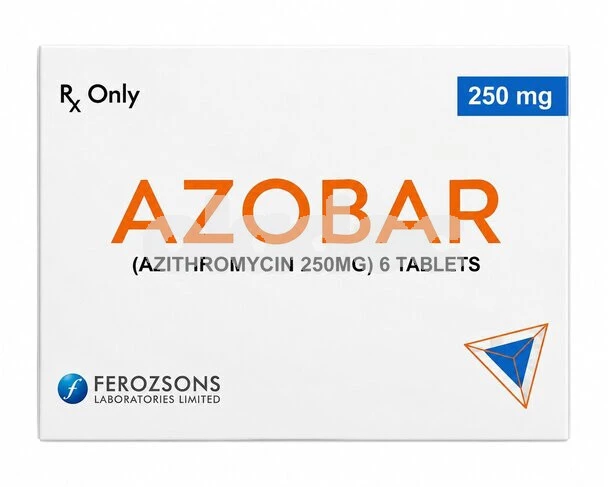
About Azobar Tablet 250mg
Azobar tablet is an antibiotic used to treat bacterial infections. It works by stopping the growth of bacteria in the body.
Azobar Tablet Uses 250 mg
- Treats pneumonia and bronchitis caused by bacterial infection
- Relieves bacterial sore throat and tonsillitis
- Clears bacterial sinusitis when symptoms persist or worsen
- Used for middle ear infections, especially in adults
- Treats skin infections caused by certain bacteria
- Prescribed for chlamydia and some other bacterial STIs
- Used in some cases as part of typhoid treatment in Pakistan
- Occasionally prescribed for bacterial conjunctivitis (pink eye)
When Not to Use Azobar Tablet
- Not for patients with a known allergy to azithromycin or any macrolide antibiotic.
- Avoid if you have a history of liver damage or jaundice caused by a previous azithromycin course.
- Not suitable for patients with a diagnosed heart condition causing QT interval prolongation.
- Avoid in patients with myasthenia gravis, a condition causing serious muscle weakness.
- Not recommended for patients with a history of severe allergic reactions (anaphylaxis) to antibiotics.
- Avoid if you have a history of pancreatitis linked to previous azithromycin use.
Azobar Tablet Uses in Urdu
یہ دوا بیکٹیریا سے ہونے والے انفیکشنز کے علاج کے لیے استعمال کی جاتی ہے، جیسے سانس کی نالی، گلے اور کان کے انفیکشن۔
یہ جلد اور زخموں کے بیکٹیریائی انفیکشن کو ختم کرنے میں مدد دیتی ہے۔
یہ دوا ٹائیفائیڈ بخار اور بعض جنسی طور پر منتقل ہونے والی بیماریوں کے علاج میں بھی کارآمد ہے۔
اس دوا کو ڈاکٹر کی ہدایت کے بغیر استعمال نہ کریں اور پورا کورس مکمل کریں۔
کوئی بھی ضمنی اثر محسوس ہونے پر فوری طور پر اپنے ڈاکٹر سے رجوع کریں۔
Azobar Tablet 250mg formula
Available forms
- Azobar tablet - 250mg
- Azobar tablet - 500mg
- Azobar dry suspension - 200mg/5ml
How to use Azobar Tablet 250mg?
- Adults: one tablet (250mg) once daily for 3 to 5 days, as directed by your doctor.
- Maximum daily dose: one 250mg tablet per day for standard bacterial infections.
- Children under 12 years: not recommended for tablet form without specific medical advice.
- Azobar tablet can be taken with or without food, though taking it on an empty stomach improves absorption.
- Swallow the tablet whole with a full glass of water, without crushing or chewing.
- Complete the full prescribed course even if symptoms improve within the first two days.
- Do not stop this medicine suddenly without consulting your doctor, as the infection may return.
Drug Interactions
- Warfarin: Azobar tablet may increase the blood-thinning effect of warfarin, raising the risk of unusual bleeding.
- Antacids (aluminum or magnesium-based): These reduce azithromycin absorption; take Azobar tablet at least 2 hours before or after antacids.
- Pimozide: Using this psychiatric medicine with azithromycin significantly raises the risk of serious heart rhythm problems.
- Cyclosporine: Azobar tablet may raise cyclosporine blood levels, increasing the risk of high blood pressure and kidney strain.
- Digoxin: Azithromycin may elevate digoxin levels in the blood; close monitoring is required if both are used together.
- Statins (e.g., atorvastatin): A rare risk of muscle damage (rhabdomyolysis) exists when azithromycin is combined with certain statins.
- Colchicine: Combining azithromycin with colchicine may increase colchicine toxicity; monitor closely under medical supervision.
Risks and warnings
- QT prolongation risk: Azithromycin can affect heart rhythm; patients with heart disease or low potassium levels need careful monitoring.
- Severe hepatic impairment: Azobar tablet is processed by the liver; patients with serious liver disease should avoid it or use it with caution.
- Clostridioides difficile-associated diarrhea: Antibiotic use, including azithromycin, can trigger severe diarrhea; tell your doctor if diarrhea worsens or becomes bloody.
- Antibiotic resistance: Azobar tablet must only be used for confirmed bacterial infections, not viral illnesses like the flu or common cold.
- Nosocomial infections: Azobar tablet is not appropriate for hospital-acquired infections or severe pneumonia requiring intravenous antibiotics.
- Pregnancy: Azithromycin should only be used in pregnancy if the potential benefit clearly outweighs the risk; discuss with your doctor.
- Breastfeeding: Small amounts of azithromycin pass into breast milk; consult your doctor before using Azobar tablet while breastfeeding.
- Elderly patients: Older patients with underlying heart conditions should be monitored closely for signs of abnormal heart rhythm.
- Kidney problems: Mild to moderate kidney disease does not usually require dose adjustment, but inform your doctor of any kidney condition.
Azobar Tablet Side Effects
- Nausea
- Vomiting
- Diarrhea or loose stools
- Stomach pain or cramping
- Loss of appetite
- Headache
- Dizziness
- Skin rash or itching
- Allergic reaction, including swelling of the face, lips, or throat
- Yellowing of the skin or eyes (jaundice)
- Irregular or fast heartbeat
- Severe or bloody diarrhea (possible sign of C. difficile infection)
- Hearing loss or ringing in the ears (tinnitus), especially with prolonged use
- Muscle pain or weakness
Storage Conditions
- Store at room temperature, below 30°C.
- Keep away from direct sunlight, heat, and moisture.
- Keep out of reach of children and pets.