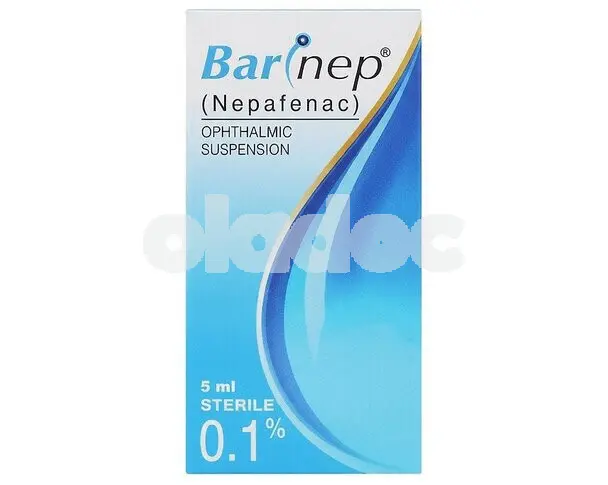
About Barinep Drops 0.10%
Barinep Drops contains Nepafenac, an NSAID, used to reduce pain and swelling after eye surgery.
Barinep Drops Uses
- Controls pain and inflammation after cataract surgery
- Prevents constriction of the pupil during eye surgery
- Reduces swelling and irritation following other eye procedures
- Manages discomfort linked to postoperative eye inflammation
Barinep Drops Benefits
- Eases postoperative eye pain within hours of application
- Lowers the risk of prolonged inflammation after surgery
- Supports faster and more comfortable visual recovery
- Reduces the need for oral pain relievers after eye procedures
What Experts Say
Nepafenac is a prodrug nonsteroidal anti-inflammatory drug. Once it crosses the cornea, ocular tissue enzymes convert it into amfenac, the active form that blocks the cyclooxygenase enzyme. This action lowers prostaglandin production, the chemical messengers responsible for pain, swelling and redness after eye surgery.
Clinical studies in ophthalmology support nepafenac for controlling inflammation and discomfort following cataract surgery. Because it penetrates ocular tissue efficiently, it reaches therapeutic concentrations in both the front and back segments of the eye. This broader tissue reach helps address swelling that can affect the retina after surgery, not just the outer eye.
Nepafenac is generally well tolerated when used as directed. Mild burning or stinging on instillation is common and usually resolves quickly. Ophthalmologists advise caution in patients with corneal disease, diabetes or rheumatoid arthritis, since NSAID eye drops can occasionally slow corneal healing in these groups.
Drug Class
- Nonsteroidal Anti Inflammatory Drug (NSAID)
- Ophthalmic Prostaglandin Synthesis Inhibitor
Barinep Drops 0.10% Uses in Urdu
- آنکھ کی سرجری کے بعد سوزش اور درد کم کرنے کے لیے
- موتیا یعنی کیٹاریکٹ کے آپریشن کے بعد آنکھ کی حفاظت کے لیے
- آپریشن کے دوران پُتلی کے سکڑاؤ کو روکنے کے لیے
- آنکھ کی جلن اور لالی میں کمی کے لیے
Barinep Drops 0.10% formula
How to use Barinep Drops 0.10%?
- Shake the bottle well before each use.
- Wash your hands before applying the drop.
- Instill one drop into the affected eye three times a day, starting one day before eye surgery and continuing as directed.
- Avoid touching the dropper tip to your eye or any surface.
- Wait at least five minutes between this drop and any other eye medicine.
- Continue the full course even if symptoms improve, unless your doctor tells you to stop.
Drug Interactions
- Topical Corticosteroids: Combined use with steroid eye drops may raise the risk of corneal healing problems.
- Other Topical NSAIDs: Using more than one NSAID eye drop together increases the chance of corneal complications and offers no added benefit.
- Oral Anticoagulants: Patients on blood thinners like warfarin may have a higher risk of bleeding related side effects with prolonged NSAID eye drop use.
- Contact Lens Solutions: This drop is not meant to be used while wearing contact lenses, so avoid combining it with lens care products during treatment.
Risks and warnings
- Allergy Risk: Avoid this drop if you are allergic to nepafenac or other NSAIDs like aspirin or ibuprofen.
- Delayed Healing: Prolonged use after eye surgery may slow corneal healing and raise infection risk.
- Pregnancy Caution: Avoid use in the last trimester of pregnancy unless your doctor advises otherwise.
- Contact Lens Use: Remove contact lenses before applying this drop and wait at least fifteen minutes before reinserting.
- Combined Steroid Use: Using steroid eye drops together with this medicine raises the risk of corneal problems, so only combine under medical supervision.
Barinep Drops Side Effects
- Temporary burning or stinging after application
- Blurred or hazy vision
- Watery eyes or increased tearing
- Sensation of something in the eye
- Eye redness or itching
- Sensitivity to light
- Mild eye pain
- Increased pressure inside the eye
- Delayed corneal healing with prolonged use
- Allergic reaction with swelling, rash or difficulty breathing in rare cases
Storage Conditions
- Store the bottle at room temperature, between 15 and 25 degrees Celsius.
- Keep the bottle tightly closed when not in use.
- Protect the drops from direct sunlight and heat.
- Discard the bottle four weeks after opening, even if drops remain.
- Keep out of reach of children.
- Avoid storing in the bathroom or near the sink where moisture is high.