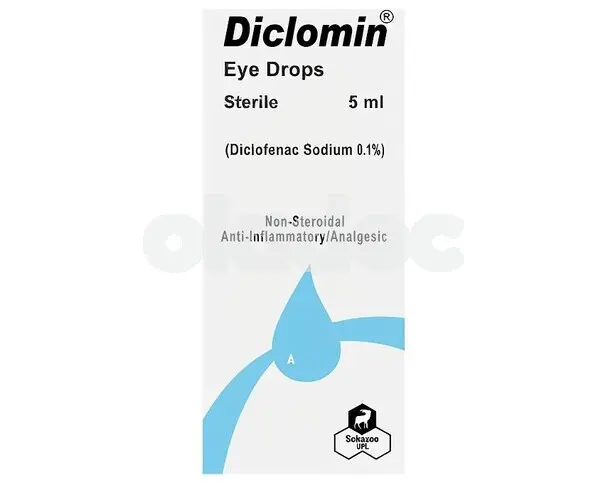
About Diclomin drops 0.001
Diclofenac Sodium 0.1% NSAID eye drops used to control pain, swelling and inflammation after eye surgery.
Diclomin Drops Uses
- Pain and inflammation control after cataract surgery or other eye procedures.
- Prevention of pupil constriction (miosis) during cataract surgery, when used before the operation.
- Light sensitivity and discomfort that follows minor eye surgery or laser treatment.
- Short term inflammation control for eye injuries, under a doctor's supervision.
Diclomin Drops Benefits
- A steroid free option for inflammation control, useful when steroid drops carry added risk.
- Fast acting relief from surgical discomfort within the first day of use.
- Compatibility with a standard post surgery eye drop schedule alongside antibiotics.
What Experts Say
Diclofenac blocks the cyclooxygenase enzyme that produces prostaglandins, the chemicals responsible for pain, redness and swelling inside the eye after surgery or injury. Lower prostaglandin levels mean less inflammation and a more comfortable recovery.
Doctors across Pakistan prescribe this drop mainly around cataract surgery, since prostaglandin release during the procedure is what causes pupil narrowing and post operative discomfort. A short, supervised course limits inflammation without the added risks that steroid drops can carry.
Extended use beyond the prescribed duration raises the risk of corneal complications, particularly in people with dry eye, diabetes or rheumatoid arthritis. This is why the drop is dispensed against a prescription, with the treatment length set by the operating eye surgeon.
Diclomin Drops Uses in Urdu
- موتیا کے آپریشن کے بعد آنکھ کے درد اور سوجن کو کم کرنے کے لیے۔
- آپریشن سے پہلے آنکھ کی پتلی کو سکڑنے سے روکنے کے لیے۔
- آپریشن کے بعد روشنی کی حساسیت اور تکلیف میں آرام کے لیے۔
- ڈاکٹر کی نگرانی میں آنکھ کی چوٹ کے بعد قلیل مدتی سوزش کم کرنے کے لیے۔
Diclomin drops 0.001 formula
- Diclofenac Sodium 0.1% w/v
How to use Diclomin drops 0.001?
- One drop in the operated or affected eye, exactly as the eye surgeon directs.
- A typical post surgery schedule runs four times daily, starting the day of or before the procedure.
- Clean hands and a dropper tip that avoids contact with the eye reduce contamination risk.
- The full course, even after discomfort settles, should be finished unless the doctor advises stopping early.
Drug Interactions
- Topical Corticosteroid Eye Drops: Combined use can raise the risk of delayed corneal healing when both are used long term.
- Other Topical NSAID Eye Drops: Doubling up on this drug class adds to the risk of corneal side effects without added benefit.
- Oral Anticoagulants like Warfarin: A small additional bleeding risk exists with concurrent NSAID eye drop use, though systemic absorption is limited.
Risks and warnings
- Corneal Complications: Extended use beyond the prescribed period raises the risk of corneal thinning or delayed healing.
- Diabetes and Rheumatoid Arthritis: Either condition raises the risk of corneal problems with this class of eye drop.
- Existing Corneal Damage: A damaged or thin cornea is a reason to avoid this drop unless a specialist advises otherwise.
- Bleeding Tendency: Caution is needed in people who bruise or bleed easily, since NSAIDs affect clotting locally.
Diclomin Drops Side Effects
- Burning or stinging for a few seconds right after the drop goes in.
- Temporary blurred vision immediately following application.
- Increased sensitivity to light in the hours after use.
- Corneal thinning or delayed wound healing with prolonged or excessive use, though this is uncommon at prescribed doses.
Storage Conditions
- Room temperature storage, between fifteen and twenty five degrees Celsius, keeps the solution stable.
- A tightly closed cap between uses prevents contamination.
- Four weeks after opening is the usual limit before the bottle should be discarded.
- A place away from direct sunlight and out of children's reach is best.