




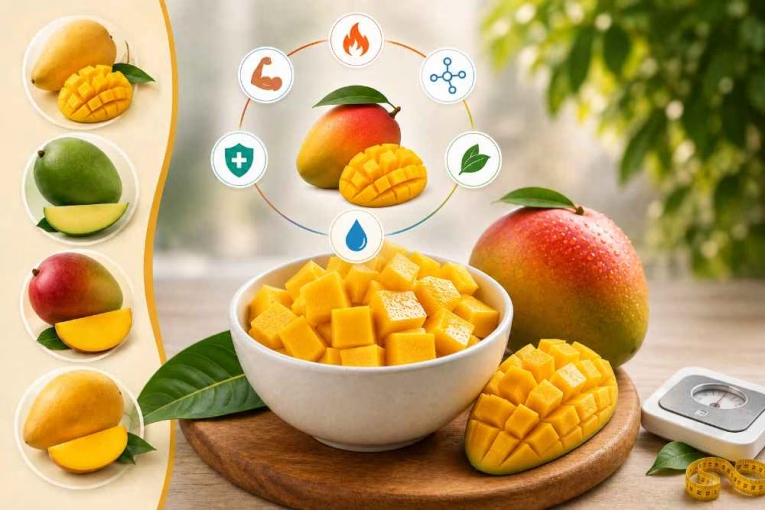
A single mango can hold anywhere from 90 to over 200 calories, depending on its size and variety. Many people underestimate this while planning a weight-loss or diabetes friendly diet.
This article breaks down mango’s exact calorie count, its sugar and fiber content, and how the fruit fits into a balanced daily diet.
Table of Contents
How Many Calories Does a Mango Have?
According to the USDA, a small mango, about 150 grams without the skin and seed, contains roughly 99 calories. Larger sizes can go up to 200 calories per fruit.
| Mango Type / Size | Approx. Weight | Calories |
| Small mango | 150g | 95 |
| Medium mango | 200g | 135 |
| Large mango | 300g | 200 |
| 1 cup mango slices | 165g | 99 |
| Mango shake (with milk and sugar) | 250ml | 210 |
Local favorites like Chaunsa, Sindhri, and Anwar Ratol vary slightly in calorie count. The difference comes down to sugar concentration and overall fruit size.
These numbers change with ripeness too. A riper mango holds more natural sugar, which raises its calorie count slightly compared to a firmer one.
What Nutrients Does Mango Provide Besides Calories?
Mango offers more than just calories. Even a small serving carries a decent mix of vitamins and minerals.
- Vitamin C in one medium mango covers a large share of the daily requirement, supporting immunity and skin health.
- Vitamin A is at a good level, too, which is useful for eye health and vision.
- Fiber reaches around 2.5 grams per 100 grams, aiding digestion and prolonging fullness.
- Natural sugar totals roughly 14 grams per 100 grams, mostly fructose and sucrose.
- Potassium supports healthy blood pressure and muscle function.
Most Popular Types of Mango
Five varieties account for most of what you will find in local markets and export crates. Here is what sets each one apart.
Sindhri Mango
Sindhri is a large, oblong mango with buttery, almost fiber-free flesh. It ripens early, usually from May to June, and is grown mainly around Mirpurkhas.
Its flavor is sweet with a mild tang, and the skin turns a soft yellow when ripe. Many exporters pick Sindhri first because it travels well and has a long shelf life.
Chaunsa Mango
Chaunsa is known for a rich, honey-like sweetness and a strong mango aroma. It ripens later in the season, typically July to August, and is grown widely around Multan.
There are white and black (Saharanpur-style) variants, both juicy with minimal fiber. It is one of the most commercially popular varieties, both locally and for export.
Anwar Ratol Mango
Anwar Ratol has the shortest season of all, usually just June. It is smaller than other varieties but makes up for size with an intensely sweet, perfume-like flavor.
The flesh is soft and creamy, almost custard-like. Mango lovers often call it the most fragrant of the lot.
Langra Mango
Langra keeps its green skin even after ripening, which sometimes confuses first-time buyers. Underneath, the flesh is yellow-orange, tangy-sweet, and slightly fibrous.
It ripens in the mid to late season, around July and August. The tartness makes it a favorite for people who find other varieties too sweet.
Dusehri Mango
Dusehri is a smaller, thin-skinned mango with a mild, aromatic sweetness and almost no fiber. It ripens earlier in the season, generally June to July.
Its smooth texture makes it a common choice for shakes, desserts, and eating fresh with a spoon.
Mango Varieties at a Glance
| Variety | Season | Taste & Texture | Growing Region |
| Sindhri | May–June | Sweet, buttery, low fiber | Mirpurkhas, Sindh |
| Chaunsa | July–August | Honey-sweet, juicy | Multan, Punjab |
| Anwar Ratol | June (short) | Intensely sweet, creamy | Punjab |
| Langra | July–August | Tangy-sweet, slight fiber | Punjab |
| Dusehri | June–July | Mildly sweet, smooth | Punjab |
Is Mango Good for Weight Loss?
Mangoes can fit into a weight-loss plan when you keep portions in check. The fiber helps you feel full, even though the fruit is naturally sweet.
Portion size causes most problems, not the fruit itself. A full plate of mango slices adds up to more calories than expected.
Smaller servings, around half a cup, keep calorie intake in check while still delivering the nutrients.
Pairing with protein, like plain yogurt, slows sugar absorption and steadies energy levels.
Shakes and juices carry hidden calories. Added sugar and milk push the total far higher than raw fruit alone.
Does Mango Affect Blood Sugar Levels?
Mango carries a moderate glycemic index, which means it raises blood sugar gradually rather than in a sharp spike.
People managing diabetes can still include mango in their diet. Portion control and timing matter more here than for many other fruits.
Small servings limit the sugar load per sitting, which helps avoid a sharp glucose rise.
Timing with meals, alongside protein or fat, slows how quickly sugar enters the bloodstream.
Personal monitoring helps too, since blood sugar response to mango varies from person to person.
How Many Mangoes Can You Eat in a Day?
Most nutrition guidance points toward one medium mango per day as a reasonable upper limit for a general healthy diet.
Active individuals with higher calorie needs can often stretch that to one and a half mangoes without much concern.
People managing diabetes or watching calorie intake closely benefit from staying near half a mango per sitting.
Children generally do well with a quarter to half a mango, depending on age and appetite.
Stretching daily intake beyond this range does not cause harm on its own, though it adds up quickly in calories and natural sugar.
Mango Calories Compared to Other Common Fruits
Mango calories often get compared against other everyday fruits, and the numbers land somewhere in the middle of the fruit bowl.
| Fruit (per 100g) | Calories |
| Mango | 60 |
| Banana | 89 |
| Grapes | 69 |
| Apple | 52 |
| Papaya | 43 |
Health Benefits of Mango Beyond Calorie Count
Calorie count only tells part of the story. Mango does more for the body than just help with weight management.
- Vitamin A and vitamin C support skin health, both linked to collagen production and repair.
- The strong vitamin C content backs the immune system’s natural defense response.
- Regular fiber intake improves digestion, and mango contributes a meaningful share toward that daily total.
- Potassium supports heart health by helping balance sodium levels and ease pressure on blood vessels.
For more details, read Mango Health Benefits: 14 Amazing Reasons to Eat Mangoes
Common Mistakes People Make When Counting Mango Calories
Certain habits push mango’s calorie count higher than most people realize.
- Overripe mangoes get skipped over for calorie counting, yet they carry more natural sugar than firmer ones.
- Mango shakes get treated as a light snack, despite carrying added sugar and full cream milk in most recipes.
- Dried mango slices seem harmless in small amounts, but the drying process concentrates both sugar and calories per bite.
- Unmeasured portions from a large batch lead to servings well beyond a single mango.
When Should You See a Nutritionist at oladoc?
Frequent blood sugar spikes after eating fruit are worth a conversation with an experienced nutritionist in Lahore.
A nutritionist in Lahore can build a personalized meal plan that fits mango and other fruits into specific calorie and sugar targets, based on individual health goals.
The Takeaway
Pakistan’s mango varieties each bring something different to the table, from Sindhri’s buttery sweetness to Langra’s tang. Mango holds about 135 calories in a medium serving, along with fiber, vitamin C, and potassium.
Portion size ultimately decides whether mango works for or against a weight loss or diabetes management goal.
A medium mango has about 135 calories, though this shifts with size and variety.
Yes, mango carries roughly 14 grams of natural sugar per 100 grams, mostly as fructose.
Small portions are usually safe when paired with protein or fat to slow sugar absorption.
Mango can support weight loss in controlled portions due to its fiber and nutrient density.
No, mango shakes usually carry added sugar and milk, which raises the calorie count significantly.
Any time works, though pairing mango with a meal instead of eating it alone helps manage blood sugar response.
