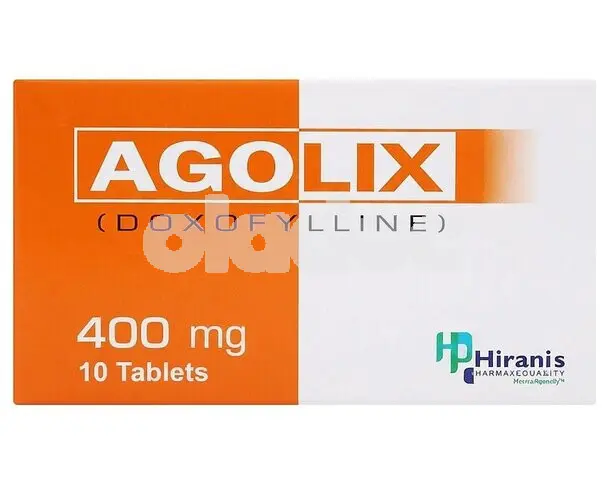
About Agolix Tablet 400 mg
Agolix Tablet 400 mg contains doxofylline, a xanthine bronchodilator used in asthma and COPD.
Agolix Tablet 400 mg Uses
- Long term maintenance control of bronchial asthma in adults
- Relief of wheezing and chest tightness in chronic obstructive pulmonary disease
- Management of chronic bronchitis with recurrent breathlessness
- Supportive therapy in emphysema with persistent airflow limitation
- Additional oral option when inhaled therapy alone does not settle night time symptoms
- Reduction of bronchospasm triggered by exercise or cold air
Agolix Tablet 400 mg Benefits
- Relaxes airway smooth muscle so breathing feels easier within a few hours
- Lower risk of palpitations and stomach upset than older theophylline products
- Taken by mouth, which helps patients who struggle with inhaler technique
- Wider safety margin means routine blood level testing is not required
- Twice daily dosing fits easily into a normal daily routine
- May reduce night time waking caused by airway narrowing
What Experts Say
Doxofylline belongs to the methylxanthine family but differs from theophylline in one important way. The dioxolane group at position seven lowers its affinity for adenosine A1 and A2 receptors, which is the main reason it produces fewer cardiac and gastric side effects at bronchodilating doses.
Physicians value this wider therapeutic window because routine blood level monitoring is not required the way it is with theophylline. The 400 mg strength is normally given twice or three times daily in adults, and the dose is reduced in liver disease since hepatic metabolism drives clearance.
Pakistan carries a heavy burden of asthma and chronic obstructive pulmonary disease, worsened by seasonal smog, biomass cooking fuel and high smoking rates. Doctors across Pakistan often add doxofylline to inhaled therapy when symptoms and night time waking persist, while still treating inhalers as the foundation of control rather than a replacement.
Drug Class
- Methylxanthine bronchodilator
- Selective phosphodiesterase inhibitor
- Respiratory smooth muscle relaxant
Agolix Tablet 400 mg Uses in Urdu
- دمہ کے مریضوں میں سانس کی نالیوں کو کھلا رکھنے کے لیے استعمال کی جاتی ہے
- پھیپھڑوں کی دائمی بیماری سی او پی ڈی میں سانس کی تنگی کم کرتی ہے
- دائمی برونکائٹس میں کھانسی اور گھٹن کی شکایت میں افاقہ دیتی ہے
- سینے کی جکڑن اور سانس لیتے وقت سیٹی کی آواز کو کم کرتی ہے
- رات کے وقت سانس پھولنے کی وجہ سے نیند خراب ہونے میں مدد دیتی ہے
- انہیلر کے ساتھ اضافی علاج کے طور پر ڈاکٹر کے مشورے سے دی جاتی ہے
Agolix Tablet 400 mg formula
How to use Agolix Tablet 400 mg?
- Take Agolix Tablet 400 mg exactly as your doctor prescribes, usually one tablet two or three times a day.
- Swallow the tablet whole with a glass of water, do not crush or chew it.
- Taking it after food helps if you notice nausea or stomach discomfort.
- Keep the same gap between doses every day so airway control stays steady.
- Do not stop the tablet suddenly once you feel better, because symptoms can return quickly.
- If you miss a dose, take it when you remember unless the next dose is near, and never double up.
- Continue your prescribed inhalers alongside this tablet unless your doctor advises otherwise.
Drug Interactions
- Ciprofloxacin and other quinolone antibiotics: These slow xanthine breakdown and can raise blood levels, increasing tremor and palpitations.
- Erythromycin and other macrolides: Liver enzyme inhibition may increase doxofylline exposure and the chance of side effects.
- Ephedrine and other sympathomimetics: Combined use heightens nervousness, tremor and rapid heartbeat.
- Rifampicin, phenytoin and carbamazepine: These speed up metabolism and can weaken the bronchodilator effect.
- Caffeine and other xanthine containing products: Additive stimulant effects can cause jitteriness and poor sleep.
- Diuretics such as furosemide: Potassium loss may be worsened, especially when high dose beta agonist inhalers are also used.
Risks and warnings
- Heart conditions: Patients with arrhythmia, angina or a recent heart attack need close supervision because xanthines can raise heart rate.
- Liver impairment: The liver clears doxofylline, so a reduced dose is advised in hepatic disease to prevent accumulation.
- Kidney disease: Significant renal impairment may call for dose adjustment and periodic review of kidney function.
- Seizure history: Xanthine derivatives can lower the seizure threshold in people with epilepsy.
- Peptic ulcer: An active ulcer or severe acidity may worsen, so report burning stomach pain to your doctor.
- Pregnancy and breastfeeding: Use only when clearly needed, since safety data in pregnancy and nursing mothers is limited.
- Overactive thyroid: Hyperthyroidism can amplify the tremor and palpitations linked with this medicine.
- Caffeine intake: Heavy tea, coffee or energy drink use adds to stimulant effects and should be limited.
Agolix Tablet 400 mg Side Effects
- Nausea or a general feeling of stomach upset
- Vomiting in some patients
- Upper abdominal pain or heartburn
- Headache
- Dizziness or a light headed feeling
- Difficulty falling asleep
- Restlessness or irritability
- Palpitations or a faster than usual heartbeat
- Fine trembling of the hands
- Dry mouth
- Skin rash or itching in rare allergic reactions
- Seizures at very high blood levels, which is rare
Storage Conditions
- Store the blister strips below 30 degrees Celsius in a cool and dry place
- Keep the tablets inside their original foil pack until the moment you take a dose, since humidity spoils them
- Avoid the bathroom cabinet and the kitchen shelf where steam and heat collect
- Keep the pack away from direct sunlight and well out of reach of children
- Do not use tablets past the printed expiry date or if the blister is torn or discoloured