




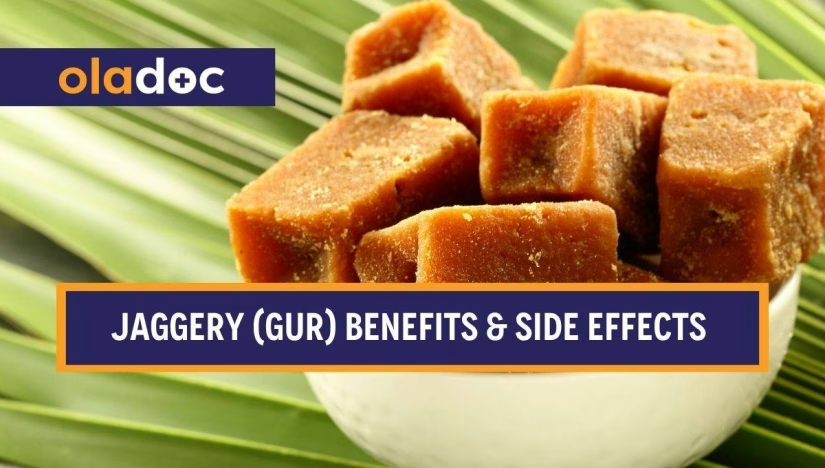
Jaggery, called gur or gurr in Urdu, is an unrefined sweetener made by boiling down sugarcane juice until it solidifies into a solid block or granules. It’s a staple across South Asian kitchens, from gur wale chawal (jaggery rice) to a small piece eaten after meals, to aid digestion and satisfy sugar cravings. Read the article to know all about the remarkable health benefits of jaggery.
Quick Answer: Jaggery is the English name for gur. It’s genuinely more nutritious than white sugar, since it retains iron, potassium, and magnesium during processing. But it’s still mostly sugar, and its glycemic index is actually higher than white sugar’s, so it isn’t the diabetes friendly swap it’s often marketed as.
Table of Contents
Key Takeaways
- Jaggery is called gur or gurr in Urdu and Hindi, an unrefined sugar made from sugarcane or palm sap.
- It contains real amounts of iron, potassium, and magnesium that white sugar lacks entirely.
- A 2024 randomized trial found jaggery paired with iron syrup improved hemoglobin faster than iron syrup alone in anemic children.
- Jaggery’s glycemic index is around 84, higher than white sugar’s roughly 65, making it a poor choice for people managing blood sugar.
- Claims that jaggery detoxifies the liver or dramatically boosts immunity aren’t supported by evidence.
Jaggery Meaning in Urdu (What Is Gur?)

Jaggery is called gur in Urdu and Hindi, written as گڑ in Urdu script. Some people spell it gurr or gud, but they all refer to the same thing.
It’s made by boiling raw sugarcane juice, or sometimes palm or date sap, until the water evaporates and the mixture solidifies. Unlike white sugar, this process doesn’t strip out the molasses, which is why jaggery keeps its dark color, earthy flavor, and mineral content.
In English, jaggery is the standard name used internationally, though it’s sometimes called “unrefined cane sugar” on ingredient labels.
This guide covers what jaggery actually delivers nutritionally, what the research supports, and who should be cautious with it.
Jaggery Nutrition Facts (Per 100g)
According to Healthline, a 100 gram serving of jaggery, about half a cup, typically contains the following. Keep in mind a realistic single serving is closer to one tablespoon, around 15 to 20 grams.
| Nutrient (per 100g) | Amount |
| Calories | 383 kcal |
| Sucrose | 65 to 85 g |
| Fructose and Glucose | 10 to 15 g |
| Protein | 0.4 g |
| Fat | 0.1 g |
| Iron | 11 mg (about 61% of daily needs) |
| Magnesium | 70 to 90 mg (about 20% of daily needs) |
| Potassium | 1,050 mg (about 30% of daily needs) |
Top 6 Jaggery (Gur) Benefits For Your Health
The following are the benefits of jaggery (gur ke fayde) backed by evidence:
1. May Help With Iron Deficiency Anemia
Jaggery’s iron content is its strongest evidence backed benefit. A 2024 open label randomized controlled trial in South India, published in the Indian Journal of Hematology and Blood Transfusion, gave children with moderate iron deficiency anemia either iron syrup alone, or iron syrup plus a daily sesame jaggery ball for eight weeks. The jaggery group showed a greater improvement in hemoglobin than the syrup only group.
That said, jaggery alone isn’t a treatment for anemia. It worked here as an add-on to standard iron supplementation, not a replacement for it.
2. Contains Minerals White Sugar Lacks
White sugar provides calories with essentially no nutrients. Jaggery retains trace minerals through processing, including the iron, magnesium, and potassium shown in the table above, along with smaller amounts of calcium, zinc, and manganese.
This is a genuine nutritional edge over refined sugar, though the amounts in a realistic serving size are modest, not a substitute for a balanced diet.
3. Traditional Digestive Aid
Eating a small piece of jaggery after a meal is a common South Asian habit, believed to support digestion. There’s no strong clinical evidence confirming this specific practice, though jaggery’s potassium content may help with general electrolyte balance.
4. Quick Source of Energy
Jaggery’s natural sugars absorb quickly, which is why laborers and athletes have traditionally used it for a fast energy boost. This is a real, straightforward effect, since it’s simple sugar, but it isn’t meaningfully different from what any sugar provides.
5. May Support Bone and Joint Health
Jaggery’s small amounts of calcium and phosphorus are sometimes credited with easing joint pain or supporting bone health. This remains a traditional claim rather than one confirmed in clinical studies, and the mineral quantities involved are too small to meaningfully affect bone density on their own.
6. Traditionally Used for Menstrual Discomfort
Jaggery is widely believed across the subcontinent to ease period pain and mood swings. This is a long standing home remedy rather than a proven treatment, and if menstrual pain is significant or disruptive, it’s worth getting it evaluated rather than relying on diet alone.
Does Jaggery Detoxify the Liver?
No, not according to the evidence available. This is a commonly repeated claim in South Asian home remedy culture, but there’s no scientific support for jaggery having a special detoxifying effect on the liver. The liver detoxifies the body on its own through normal function, and no specific food is required to help it do that job.
Jaggery and Blood Sugar: Is It Actually Diabetic Friendly?
This is where jaggery’s health halo runs into a problem. Jaggery’s glycemic index, a measure of how quickly a food raises blood sugar, sits around 84, compared to roughly 65 for white sugar. A higher number means a faster, sharper blood sugar spike, not a gentler one.
In other words, gram for gram, jaggery can raise blood sugar faster than white sugar does. The idea that it’s automatically safe for diabetics because it’s “natural” isn’t accurate. People managing diabetes or insulin resistance should treat jaggery with the same caution as any other sugar, not as a safer alternative.
This also affects the weight loss claim often made about jaggery. Because it’s calorie dense and raises blood sugar quickly, it doesn’t support weight loss on its own, and eating it in place of a balanced meal can just as easily contribute to weight gain over time.
Jaggery vs. White Sugar
| Factor | Jaggery | White Sugar |
| Calories (per 100g) | 383 kcal | 387 kcal |
| Iron | About 11 mg | 0 mg |
| Potassium | About 1,050 mg | About 2 mg |
| Glycemic Index | About 84 (higher) | About 65 |
| Processing | Minimally processed | Highly refined |
The takeaway: jaggery is nutritionally better than white sugar because of its mineral content, but it isn’t a lower sugar or lower glycemic option. Neither should be eaten freely.
Jaggery Side Effects
Jaggery is generally safe in small, moderate amounts for healthy adults, but overuse carries real risks:
- Weight gain, since it’s calorie dense like any sugar
- Blood sugar spikes, due to its high glycemic index
- Constipation or other digestive discomfort in large amounts
- Risk of contamination or food poisoning from poorly prepared, informally sourced jaggery, so buy from a trusted seller
How Much Jaggery Is Safe to Eat a Day?
For a healthy adult without diabetes or weight concerns, around 10 to 20 grams a day, roughly one tablespoon, is a reasonable amount. People with diabetes, prediabetes, or insulin resistance should speak with a doctor before adding jaggery to their diet regularly.
Ask a Nutritionist About Jaggery in Your Diet on oladoc
If you’re diabetic, watching your weight, or just unsure how much jaggery actually fits your diet, this isn’t something to work out through home remedies alone.
A nutritionist can look at your actual health picture and tell you whether jaggery makes sense for you, and in what amount, rather than relying on generic advice.
Conclusion
Jaggery, or gur, is a genuinely better source of minerals than white sugar, with real evidence behind its iron content specifically. But it’s still sugar, with a glycemic index higher than white sugar’s, so it isn’t a free pass for people managing diabetes, weight, or blood sugar.
Enjoy it in small amounts as a swap for refined sugar, not as a health food, and check with a nutritionist if you have a condition that makes sugar intake a bigger concern.
Frequently Asked Questions (FAQs)
1. What is gur called in English?
Gur is called jaggery in English, an unrefined sugar made by boiling down sugarcane or palm sap.
2. Is jaggery good for weight loss?
Not really. Jaggery has almost the same calorie count as white sugar and a higher glycemic index, so it doesn’t support weight loss and can contribute to weight gain if eaten in excess.
3. Is jaggery good for diabetes?
No. Jaggery’s glycemic index is higher than white sugar’s, so it can raise blood sugar quickly. People with diabetes should limit it the same way they would limit sugar.
4. Does jaggery detoxify the liver?
No, there’s no scientific evidence supporting this claim. The liver detoxifies the body on its own without needing a specific food to help.
5. Can I eat jaggery every day?
In moderation, around 10 to 20 grams a day, healthy adults can generally eat jaggery daily. People with diabetes or weight concerns should check with a doctor first.
6. Is jaggery better than honey?
It depends on what you’re optimizing for. Honey generally has a lower glycemic index than jaggery, making it the better pick for blood sugar. Jaggery has the edge on iron content.
